

Beyond the Scoop: Why Ratios Matter
Most of us measure coffee by feel – a scoop here, a splash there. But to brew truly great coffee, you need to understand ratios. It’s not about strict rules, but about controlling extraction, the process of dissolving coffee’s soluble compounds into water. This is the key to flavor. Too little extraction makes coffee sour and weak; too much makes it bitter and harsh.
Think of making tea. Under-steep it, and it's watery. Over-steep it, and it's undrinkable. Coffee is similar, but with more variables. Ratios—the precise relationship between coffee grounds and water—help you find that sweet spot. While tools like refractometers measure Total Dissolved Solids (TDS) for a scientific view, understanding ratios gets you most of the way there without a lab.
Good ratios mean consistently making coffee you enjoy, not being a coffee scientist. It’s about recreating that perfect cup, time after time. Once you grasp the fundamentals, you can adjust your brewing to suit your palate and the specific coffee you’re using. It’s a journey that rewards you with a world of flavorful coffee.
The Golden Ratio: A Starting Point
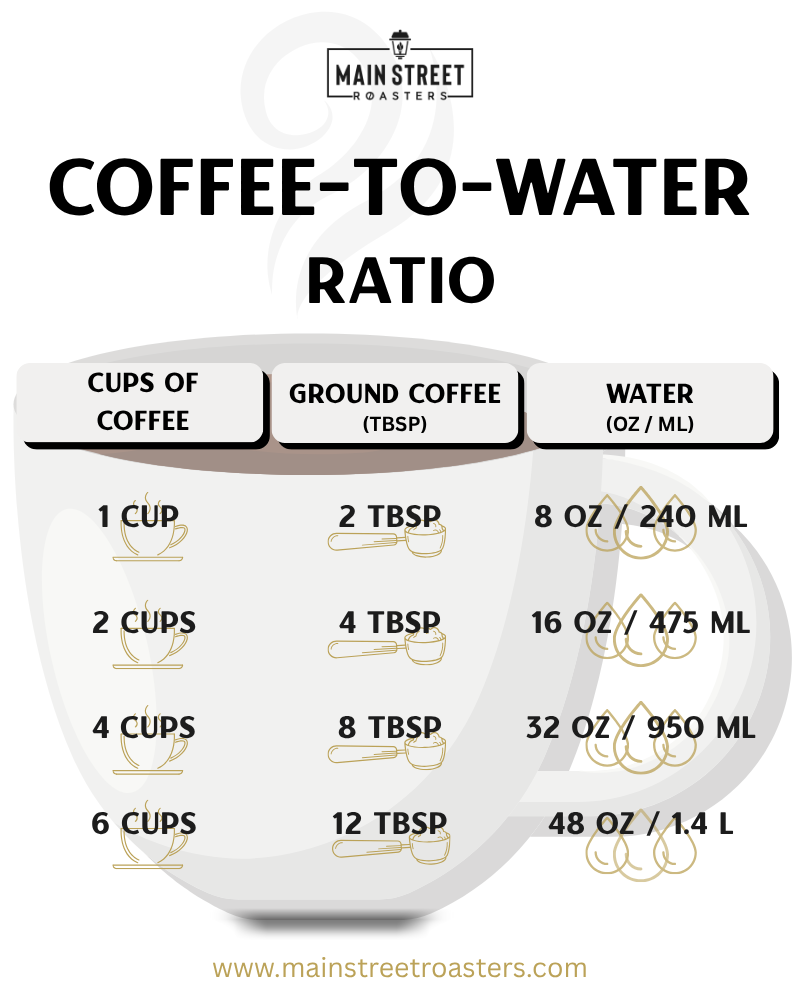
A common starting point for brewing coffee is the “golden ratio” of 1:16—1 gram of coffee for every 16 grams of water. For example, 20 grams of coffee needs 320 grams of water. This ratio offers balanced extraction for many coffees and brewing methods, providing a solid foundation for experimentation.
This isn’t a law, but a guideline. Personal preference is paramount. Some prefer a stronger, more concentrated brew, while others favor a lighter cup. Roast level also impacts the ideal ratio; darker roasts typically need less coffee than lighter roasts.
Don’t be afraid to deviate. Coffee’s beauty is its subjectivity. Begin with 1:16, taste, and adjust. Keep a brewing journal to track your experiments and note what works best for each coffee. That’s how you master your brew.
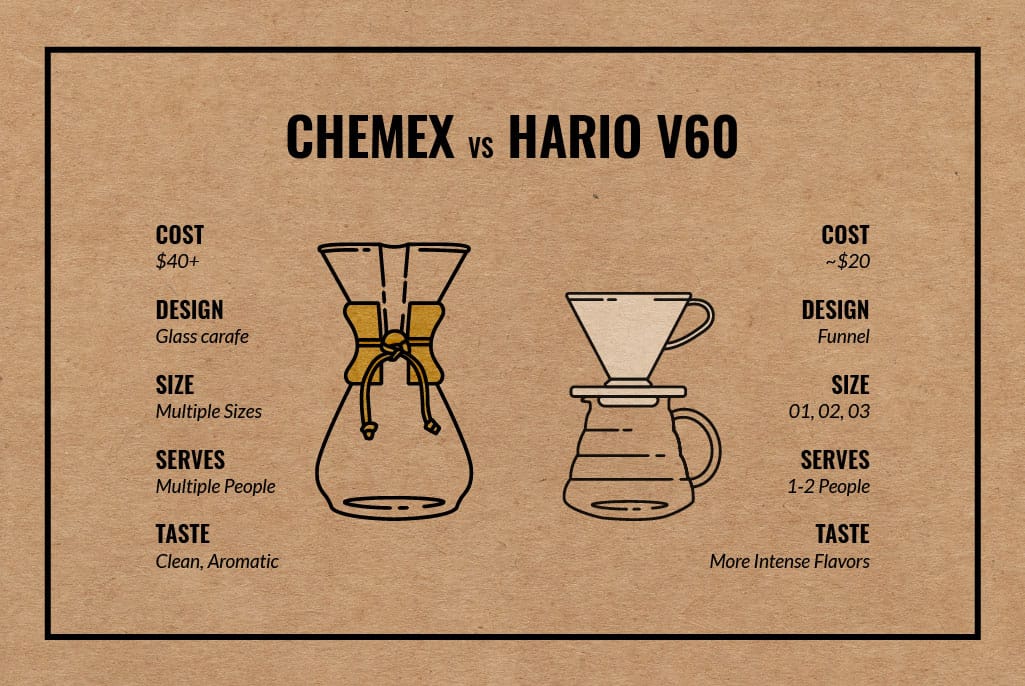
Chemex: Balancing Clarity and Body
The Chemex brewer, with its hourglass shape and thick filters, presents a unique challenge. Its thick filters remove oils and sediment, resulting in a clean, bright cup. This clarity can sometimes sacrifice body. Because of this, Chemex brewing often benefits from adjusted ratios.
Start with a ratio of 1:15 to 1:17 for Chemex. For a cleaner, more delicate cup, lean towards 1:17 or 1:18. For a fuller body, try 1:15. Grind size is also critical. A finer grind increases extraction, potentially allowing you to use a lower ratio.
Bloom time is important. A proper bloom—saturating the grounds with a small amount of hot water for 30-45 seconds—allows for degassing and even extraction. Don't rush this step! A consistent bloom sets the stage for a balanced and flavorful Chemex brew. Experimenting within this range and controlling grind size helps you find your preferred Chemex experience.
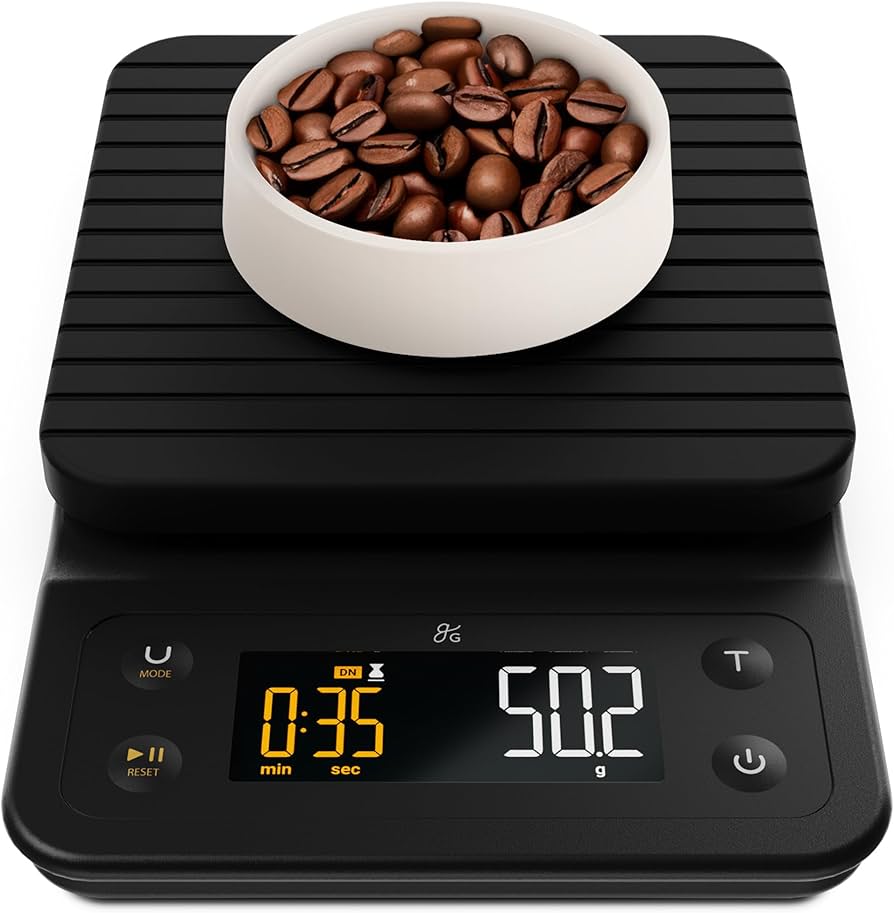
- Weigh your coffee and water accurately.
- Grind the coffee to a medium-coarse consistency.
- Place the filter in the Chemex and rinse with hot water.
- Add the coffee grounds to the filter.
- Bloom the grounds with twice their weight in water for 30 seconds.
- Slowly pour the remaining water over the grounds in a circular motion.
- Allow the coffee to drip through completely.
Pour Over: Adapting to the Cone
Standard pour over methods, like Hario V60 or Kalita Wave, generally require a different approach to ratios than Chemex. These brewers use thinner filters, allowing more oils and sediment through, resulting in a more textured cup. They also tend to have a faster flow rate.
Start with a ratio of 1:15 to 1:16 for most pour over brewers. The cone shape plays a role. The V60, with its conical shape and spiral ribs, drains faster, so you might benefit from a lower ratio (more coffee). The Kalita Wave, with its flat bottom and wave filters, offers a consistent flow rate, so 1:16 is often a good starting point.
Pouring technique is paramount with pour over. Consistent saturation of the grounds is crucial for even extraction. Avoid pouring directly onto the filter; focus on saturating all coffee grounds evenly. A slow, steady pour yields the best results. Mastering your pouring technique alongside your ratio unlocks the full potential of your pour over setup.
Coffee Bean Characteristics & Ratio Adjustments
Ideal ratios vary based on the bean’s origin and roast level. Lightly roasted coffees, with higher density and more complex acidity, often require a lower ratio – meaning more coffee – to achieve proper extraction. They need a longer extraction time to develop their flavors.
Darkly roasted coffees, which are less dense and more soluble, can handle a higher ratio – less coffee. They extract more easily and can become bitter if over-extracted. Bean density is also worth considering. Denser beans, like some from Sumatra, may require a higher dose (more coffee) because they’re less porous.
These are guidelines, not rigid rules. Experimentation is key. Start with the golden ratio, then adjust based on your taste. If a light roast tastes sour, use a bit more coffee. If a dark roast tastes bitter, use a bit less. Keep detailed notes on your adjustments and the resulting flavors. That’s how you brew perfectly.
- Light Roast: 1:15 to 1:14
- Medium Roast: 1:16 to 1:15
- Dark Roast: 1:17 to 1:18
Coffee Ratio Adjustments Based on Bean Characteristics
| Roast Level | Origin | Recommended Ratio Adjustment | Explanation |
|---|---|---|---|
| Light | African (e.g., Ethiopian Yirgacheffe, Kenyan) | Increase Coffee | Lighter roasts often benefit from a slightly higher coffee-to-water ratio to accentuate their delicate floral and fruity notes. They can be under-extracted with standard ratios. |
| Light | Central/South American (e.g., Costa Rican, Colombian) | No Change | Generally, a standard ratio works well with lighter-roasted Central/South American coffees, as they typically have balanced acidity and sweetness. |
| Medium | African (e.g., Ethiopian Sidamo) | No Change | Medium roasts from Africa often exhibit a good balance of flavor and body at standard ratios. Adjustments are typically not needed. |
| Medium | Central/South American (e.g., Guatemalan, Brazilian) | Decrease Coffee | Medium-roasted Central/South American beans can sometimes become slightly bitter with a standard ratio. Reducing the coffee slightly can help highlight their sweetness. |
| Medium | Indonesian (e.g., Sumatran Mandheling) | No Change | Medium roast Indonesian coffees typically have earthy and full-bodied profiles that work well with a standard ratio. |
| Dark | African (e.g., Rwandan) | Decrease Coffee | Darker roasts of African beans can easily become overly bitter. Reducing the coffee amount helps to mitigate this and retain some of the origin characteristics. |
| Dark | Central/South American (e.g., Mexican) | Decrease Coffee | Dark roasts from this region often develop chocolatey and nutty flavors. A slightly lower coffee-to-water ratio can prevent excessive bitterness and emphasize these flavors. |
| Dark | Indonesian (e.g., Sulawesi Toraja) | No Change | Darker Indonesian roasts often have a bold, earthy character that can hold up well to a standard ratio without becoming unbalanced. |
Illustrative comparison based on the article research brief. Verify current pricing, limits, and product details in the official docs before relying on it.
Dialing In: Finding *Your* Sweet Spot
undefined or astringent? That suggests over-extraction.
Make small adjustments to the ratio – 0.5 to 1 gram at a time – and repeat the process. Keep meticulous notes on each brew, including the coffee used, the ratio, the grind size, the water temperature, and your tasting notes. This is where a brewing journal becomes invaluable.
Remember to control other variables while you’re dialing in your ratio. Keep the grind size, water temperature, and pour time consistent. Changing too many variables at once makes it difficult to isolate the impact of the ratio. Patience and attention to detail are essential for achieving consistently delicious coffee.
- Brew a test cup.
- Taste and evaluate.
- Adjust the ratio slightly.
- Repeat steps 1-3 until you find your sweet spot.
- Record your findings!
Beyond the Basics: Advanced Ratio Considerations
Once you’re comfortable with the basic coffee-to-water ratio, you can explore more advanced concepts like brew ratio versus yield. Brew ratio refers to the ratio of coffee grounds to water, while yield refers to the total amount of brewed coffee. Understanding the difference allows for greater control over concentration and flavor.
Dose – the actual amount of coffee grounds used – is also related to ratio. A larger dose requires more water, but maintaining the same ratio ensures consistent extraction. These concepts become more important as you refine your brewing technique and aim for even greater precision.
I’m not sure about the necessity of investing in a TDS meter for most home brewers. While they provide objective data, they can also add complexity. Focusing on taste and consistent brewing practices is often sufficient for achieving excellent results.
2026 Trends: What's Changing in Coffee Ratios?
Currently, we’re seeing a growing trend towards more concentrated brews, particularly within the specialty coffee community. Many baristas are experimenting with lower ratios – closer to 1:12 or even 1:10 – to create intensely flavorful and syrupy coffee. This trend is often paired with techniques like pulse pouring and pre-infusion to ensure even extraction.
Salt and Umber notes a continuing focus on precision and control in 2026, which naturally extends to ratios. There's a movement towards tailoring ratios not just to the bean, but also to the specific brewing equipment and even the water chemistry. Real Coffee Club is seeing more customers asking about optimizing ratios for their individual setups.
We're also observing increased experimentation with different water-to-coffee ratios for specific extraction goals. For example, some brewers are using a higher ratio for the initial bloom to maximize degassing, then adjusting the ratio for the main pour to fine-tune extraction. These advancements demonstrate a continued dedication to pushing the boundaries of coffee brewing.
What coffee-to-water ratio do you most often use for pour over brewing?
Whether you brew with a Chemex, V60, or another pour over method, your preferred ratio says a lot about your taste. Vote below and let us know what works best for your daily cup!

No comments yet. Be the first to share your thoughts!