

Why the Chemex suits Real Coffee Club
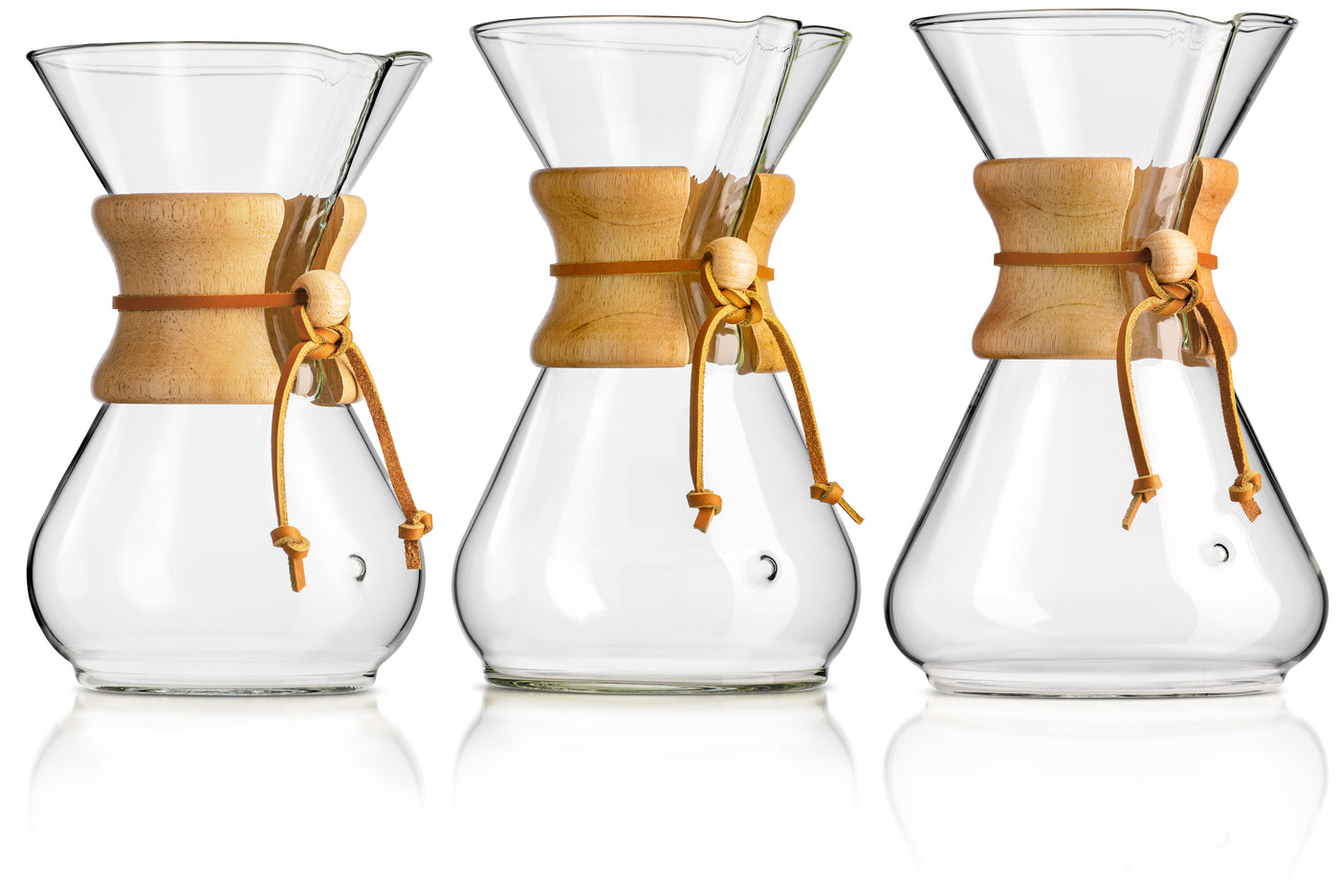
The Chemex pour-over method is the natural home for Real Coffee Club’s single-origin beans. This brewing device uses a proprietary thick bonded filter that removes nearly all coffee oils and fine sediment. The result is a cup of exceptional clarity, allowing the subtle, distinct flavors of each roast to stand out without interference.
Real Coffee Club sources beans that highlight specific regional characteristics. Whether it is the bright acidity of an Ethiopian Yirgacheffe or the chocolatey depth of a Colombian Supremo, these nuances are often masked by the heavier body of drip or French press methods. The Chemex acts as a precision instrument, stripping away the noise to reveal the signal in your coffee.
This synergy creates a tasting experience that aligns with the club’s mission. By removing the bitterness and heaviness associated with oil retention, the Chemex ensures that every note—from floral to fruity—is tasted exactly as the roaster intended. It transforms the daily brew into a focused exploration of origin.
The Real Coffee Club ratio for clean extraction
The foundation of a great Chemex brew is not just the beans, but the precise balance between them and your water. For Real Coffee Club beans, which are typically roasted to highlight nuanced origin characteristics, a standard ratio of 1:16 provides a reliable baseline. This means for every gram of coffee, you use 16 grams of water. This proportion ensures that the water extracts the desirable sugars and acids without pulling out the harsh, bitter compounds that can muddy the flavor profile.
Think of the ratio as the skeleton of your cup. If you use too little coffee, the water rushes through the grounds too quickly, resulting in a weak, watery brew that fails to carry the complex notes of your selection. If you use too much coffee, the water struggles to pass through, leading to over-extraction and astringency. The 1:16 ratio sits in the sweet spot, allowing for a controlled pour that highlights clarity and sweetness.
While 1:16 is the standard starting point, you can adjust this to suit your palate. If you prefer a bolder, more intense cup, you might move to a 1:15 ratio. Conversely, if you enjoy a lighter, tea-like body, a 1:17 ratio will work well. However, always start with the 1:16 ratio to establish a consistent baseline. This consistency allows you to isolate other variables, such as grind size or water temperature, when tuning your brew.
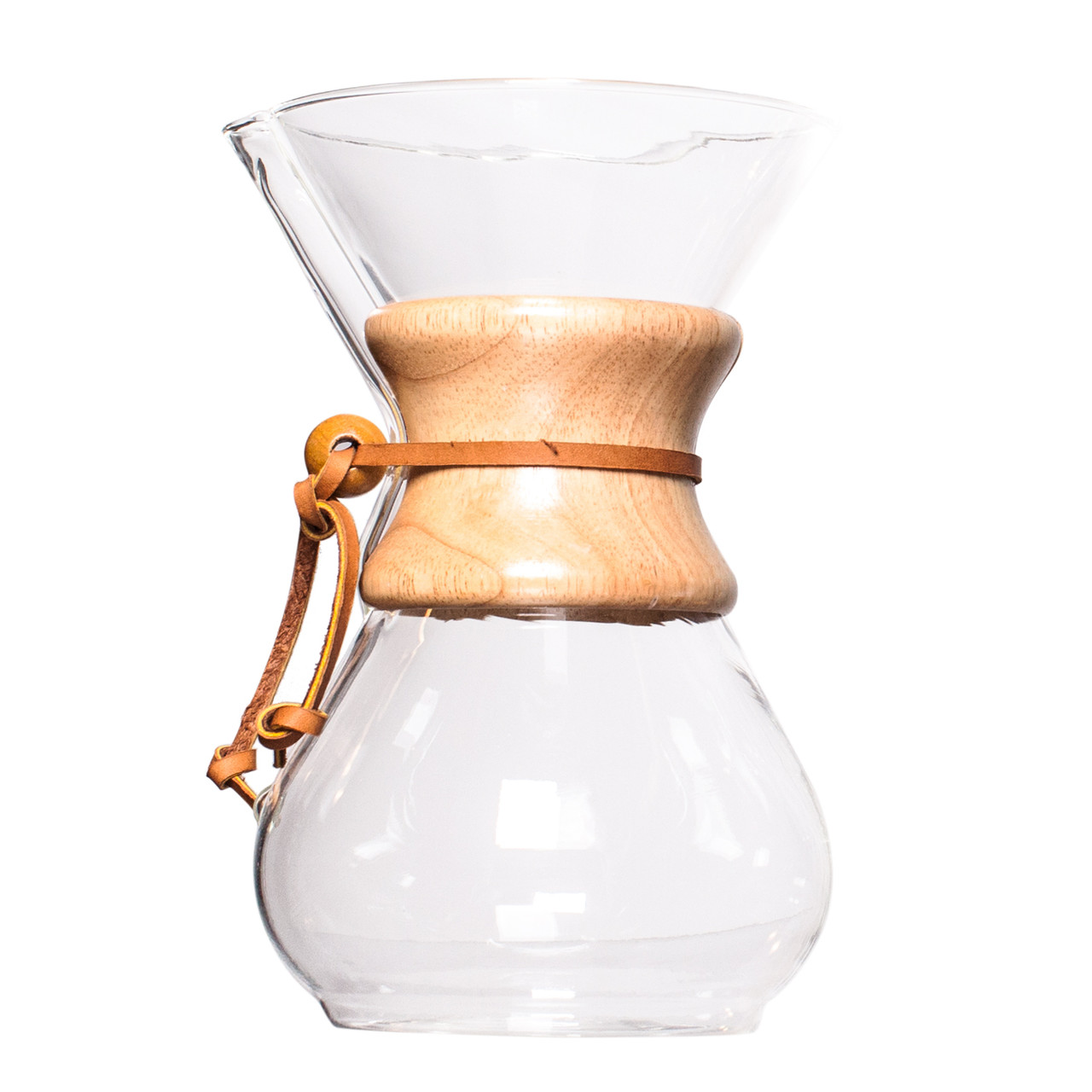
To make this easy to follow, here is the exact recipe for a single 6-cup Chemex batch using Real Coffee Club beans.
Once the brew is complete, give the carafe a gentle swirl to mix the coffee. This ensures uniform strength from the first sip to the last. Taste the brew and note the flavor notes. If it tastes sour, try a finer grind next time. If it tastes bitter, try a coarser grind. The ratio remains constant; only the grind size needs adjustment to match the specific roast and origin of your beans.
The step-by-step pour-over process
Brewing with the Chemex is less about following a rigid script and more about managing flow and time. The glass hourglass shape creates a wide bed of coffee grounds, allowing for a clean, aromatic extraction that highlights the subtle notes of your beans. At Real Coffee Club, we focus on the physical actions that give you control over the brew, turning each pour into a deliberate practice.
This process relies on three distinct phases: the bloom, the main pour, and the drawdown. Each phase requires a specific rhythm. Rushing through the bloom leads to uneven extraction, while pouring too quickly can cause the water to channel through the grounds rather than saturating them evenly. Keep your kettle steady and your gaze fixed on the surface of the coffee bed.
After placing the filter in the Chemex and rinsing it with hot water to remove paper taste and preheat the vessel, discard the rinse water. Add your freshly ground coffee—aim for a medium-coarse grind, similar to sea salt. Start your timer and pour just enough hot water (around 200°F or 93°C) to saturate the grounds completely. You will see the coffee bubble and expand as carbon dioxide escapes. This "bloom" typically lasts 30 to 45 seconds. Letting the gas escape now prevents it from interfering with water contact during the main pour, ensuring a cleaner flavor profile.
Once the bloom is complete, begin the main pour. Start at the center of the coffee bed and move outward in slow, concentric circles, then return to the center. Pour steadily, keeping the water level consistent. Avoid pouring directly onto the filter paper, as this allows water to bypass the grounds entirely. The goal is to keep the water in contact with the coffee for the entire duration. For a standard 2-cup Chemex, aim to finish this pouring phase by the 2:00 mark on your timer. This controlled agitation ensures that all grounds are evenly extracted.
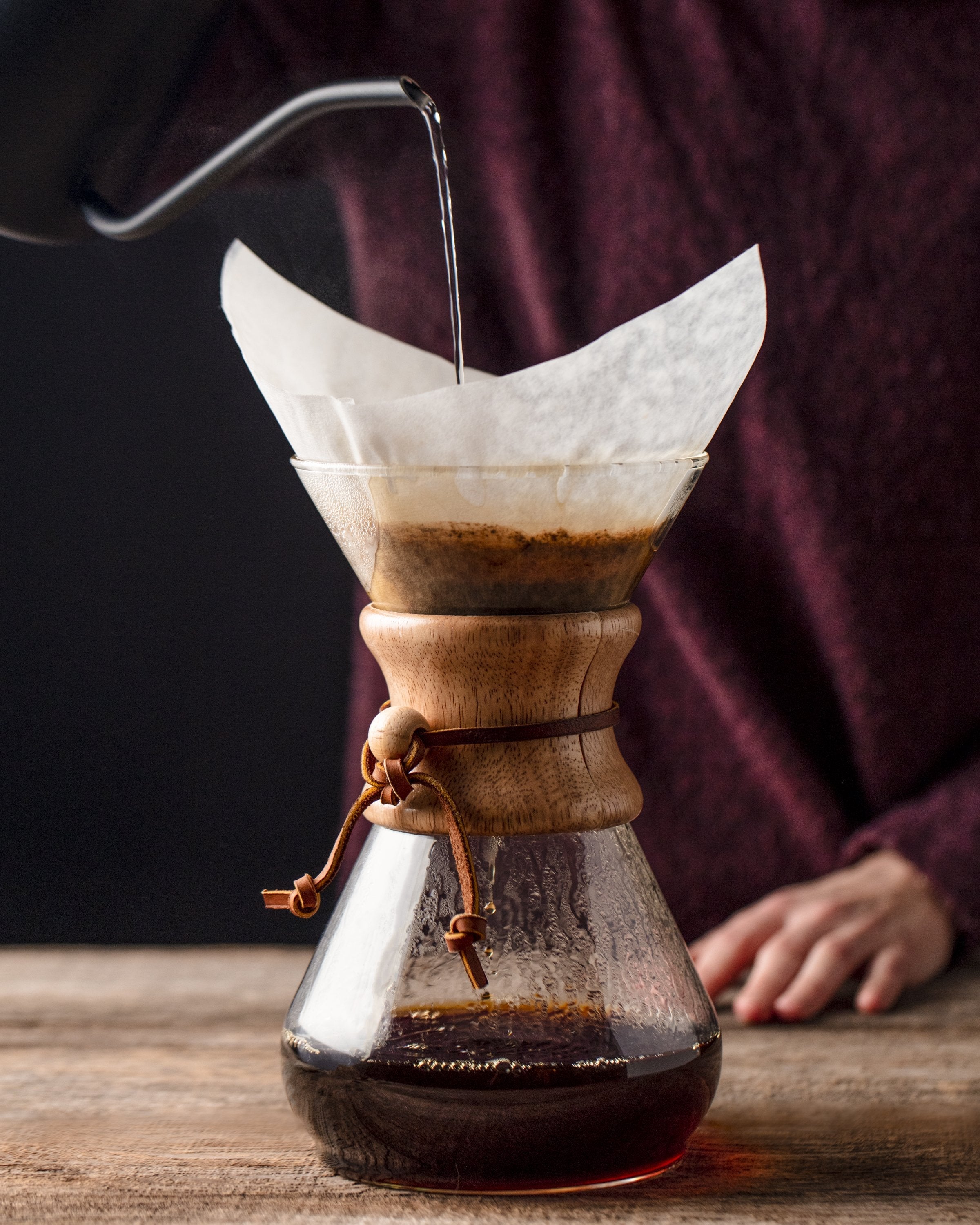
After the final pour, the water will begin to drain through the coffee bed and into the carafe below. This is the drawdown phase. Watch the level of water drop; it should descend evenly. If you see large channels or dry spots on the surface, your pour was likely too aggressive or uneven. The total brew time for a Chemex is typically between 3:30 and 4:30 minutes. When the water has fully drawn down and the bed of grounds looks flat and dry, your Real Coffee Club brew is ready to serve. Swirl the carafe gently to mix the layers before pouring into your cup.
Fixing Bitter or Sour Coffee
Even with high-quality Real Coffee Club beans, small shifts in grind or pour technique can throw off the balance. Coffee tasting notes are delicate, and the difference between a bright, clean cup and a harsh one often comes down to extraction control. Here is how to diagnose and correct the two most common errors.
| Taste Defect | Primary Cause | The Fix |
|---|---|---|
| Sour / Sharp | Under-extraction (grind too coarse or water too cool) | Grind finer, slow the pour, or increase water temperature slightly. |
| Bitter / Dry | Over-extraction (grind too fine or pour too slow) | Grind coarser, pour faster, or lower water temperature slightly. |
| Weak / Watery | Insufficient coffee-to-water ratio | Increase bean dose by 5–10 grams while keeping water volume constant. |
Sour coffee usually means the water didn't spend enough time extracting the sugars. If your brew tastes sharp or acidic, try grinding your Real Coffee Club beans a bit finer. This increases surface area, allowing the water to pull out more sweetness. You can also slow your pour slightly to give the grounds more contact time.
Bitter coffee happens when the water extracts too many harsh compounds. If the cup tastes dry or astringent, coarsen your grind. This reduces extraction speed. Ensure you aren't letting the water sit in the Chemex too long; a steady, controlled pour helps maintain consistency.
Experiment with one variable at a time. Adjusting both grind and pour speed simultaneously makes it hard to identify what works best for your specific beans and water profile.
Checking your brew quality
When the Chemex timer hits zero, the visual test begins. A successful pour-over should look like a clear, amber-tinted tea rather than a murky sludge. If the liquid appears cloudy or brown, your grind was likely too fine, or you agitated the bed too aggressively. The glass walls of the Chemex act as a natural filter; clarity is the first sign that you’ve respected the paper filter’s integrity and extracted the soluble solids without the insoluble fines.
Beyond sight, the aroma is your primary indicator of balance. A well-brewed cup offers a layered scent profile—fruity, floral, or chocolatey notes that invite you closer. If the smell is sharp, burnt, or flat, the extraction is off. Burnt notes suggest over-extraction from water that was too hot or a grind that was too coarse, allowing water to sit too long. A lack of aroma often points to under-extraction, where the water didn’t pull enough flavor compounds from the grounds.
To ensure your Real Coffee Club standards are met, use this quick evaluation checklist before you take your first sip.
-
Aroma: Does the cup smell fresh, fruity, or chocolatey without burnt or sour notes?
-
Clarity: Is the liquid transparent and amber, free of cloudiness or sediment?
-
Balance: Does the aftertaste linger pleasantly without astringency or bitterness?
Trust your senses over rigid metrics. If the cup smells inviting and looks clean, you’ve likely hit the sweet spot. If it falls short, adjust your grind size or water temperature for the next batch and try again.
Real coffee club: frequently asked: what to check next
Here are the most common questions about brewing with a Chemex and joining the Real Coffee Club subscription.
No comments yet. Be the first to share your thoughts!