

Why the Chemex Still Matters
The Chemex Coffeemaker, invented by Peter Schlumbohm in 1941, remains a staple in coffee culture for its unique ability to produce an exceptionally clean cup. Unlike mechanical brewers, it relies on simple physics and a proprietary bonded filter to strip away oils and sediment, highlighting the nuanced acidity and floral notes of the bean. In an era of automated convenience, the Chemex offers a necessary pause, rewarding precision with a purity of flavor that few other vessels can match.
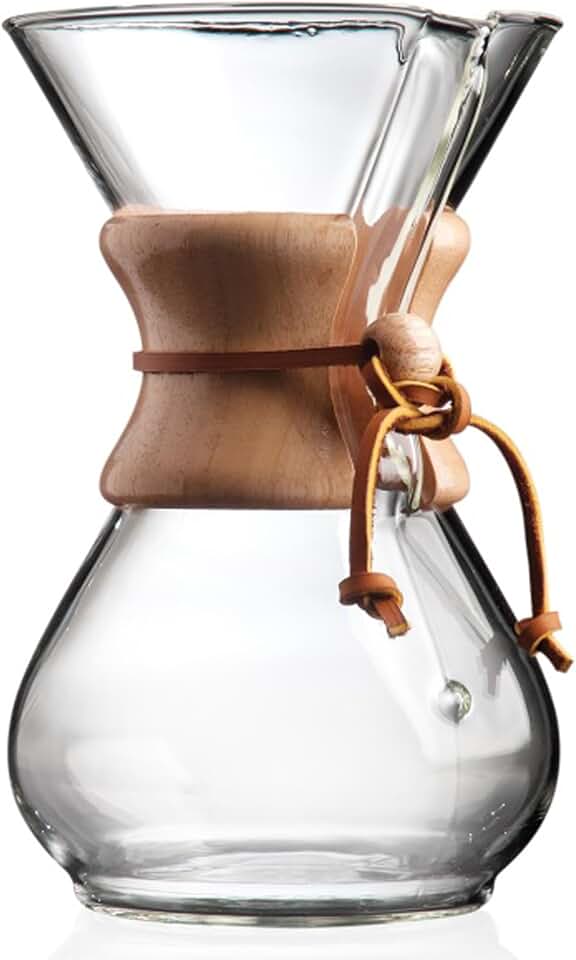
The design supports this clarity. The hourglass shape allows for even water distribution, while the wooden collar and bond handle keep the glass cool. Whether using the classic 6-Cup or the larger 8-Cup, the ratio of water to grounds remains straightforward, making it a timeless instrument for both solitary rituals and shared gatherings.
Choosing the Right Chemex Size
The Chemex Classic Series is defined by its capacity, which dictates the ritual of your brew. Each size uses a specific ratio to maintain the clean, aromatic profile the thick bonded filter is designed to produce. Selecting the right model depends on how you intend to share the pot.
The 6-Cup Chemex
The 6-Cup Chemex is the most versatile size, bridging the gap between a solitary morning ritual and a small gathering. It yields approximately 30 ounces, or four to five standard 6-ounce cups. This size is ideal for couples or individuals who enjoy a second cup without wasting fresh grounds.
The brewing ratio for the 6-Cup is 1:16. You will need 30 grams of coarse-ground coffee and 480 grams (roughly 2 cups) of water. The glass body is substantial enough to hold heat well during a leisurely breakfast but small enough to fit comfortably on most kitchen counters.
The 8-Cup Chemex
The 8-Cup Chemex is the brand’s most popular model, often cited as the "Goldilocks" size for household use. It produces about 40 ounces, or six to eight 6-ounce cups. This capacity is perfect for a family of three or four, or for hosting two to three guests on a weekend morning.
To brew the 8-Cup, use a 1:16 ratio with 38 grams of coffee and 610 grams (about 2.5 cups) of water. The wider neck and larger glass body allow for a slightly longer extraction time if needed, providing more control over the flavor clarity. It remains a manageable size for pouring and cleaning, making it a practical daily driver.
The 10-Cup Chemex
The 10-Cup Chemex is designed for entertaining. With a 50-ounce capacity, it serves eight to ten 6-ounce cups. This size is best suited for weekend brunches, office break rooms, or anyone who prefers to brew a large batch to share over a longer period. The larger volume helps maintain temperature stability once the brew is complete.
The ratio remains consistent at 1:16. You will need 48 grams of coffee and 770 grams (roughly 3.25 cups) of water. Because of the increased volume, the brewing process takes slightly longer, and the pour requires more patience to ensure even saturation of the grounds.


As an Amazon Associate, we may earn from qualifying purchases.
The Ideal Coffee Ratio for Chemex
Achieving the clean, aromatic profile that defines a great Chemex brew starts with precision. The Chemex filter is thick and dense, designed to strip away oils and sediment, which naturally leads to a lighter, tea-like body. If you under-extract by using too little coffee, the result is thin and sour. If you over-extract with too much, the delicate floral notes are buried under bitterness. The standard for this vessel is a 1:16 ratio of coffee to water by weight.
Think of the 1:16 ratio as the baseline for clarity. It is not a rigid law, but a starting point. You can adjust it slightly based on your roast preference or grind size, but deviating too far from this standard usually results in a cup that lacks balance. For example, a 1:15 ratio yields a slightly heavier body, while 1:17 offers even more transparency but risks a watery mouthfeel if your grind is too fine.
To make this practical, we break down the exact measurements for the two most common Chemex sizes: the 6-Cup and the 8-Cup. Note that Chemex "cups" are 5 ounces each, not the standard 8-ounce coffee cup. This distinction is critical for getting the volume right.
| Chemex Size | Coffee (g) | Water (g/ml) | Ratio |
|---|---|---|---|
| 6-Cup | 30 | 480 | 1:16 |
| 8-Cup | 38 | 610 | 1:16 |
The key to mastering the Chemex is consistency. Use a scale, stick to the 1:16 ratio, and adjust your grind size only if the brew time deviates significantly from the ideal 3.5 to 4.5 minutes. This precision allows the unique design of the Chemex to shine, delivering a cup that is both clean and deeply aromatic.
Mastering the Chemex Pour Over Technique
The Chemex 8-Cup and 6-Cup models are celebrated for their clean, aromatic brews, but achieving that signature clarity requires patience and precision. The thick bonded paper filter removes nearly all oils and sediment, which means your pouring technique must be deliberate to ensure even extraction. A rushed pour often leads to under-extracted, sour coffee, while a controlled flow brings out the bright, tea-like notes that make Chemex coffee unique.
Prepare and Rinse the Filter
Start by placing the Chemex filter into the brewer with the three-layer side facing the spout. This ensures the filter sits snugly against the glass, allowing the coffee to flow smoothly. Pour hot water through the filter to rinse it, which removes any papery taste and preheats the vessel. Discard the rinse water before adding your grounds. This step is essential for maintaining the temperature stability needed for a consistent brew.
Add Coffee and Bloom
For a standard Chemex brew, use a 1:16 coffee-to-water ratio. Add the grounds to the filter and tap the brewer gently to level them. Begin your timer and pour just enough hot water (around 95°C) to saturate the grounds—about twice the weight of the coffee. Let this "bloom" phase last for 30 to 45 seconds. This allows carbon dioxide to escape, preventing bitter off-flavors and ensuring even extraction in the subsequent pours.
Execute the Controlled Pour
After the bloom, pour water in slow, concentric circles, starting from the center and moving outward without touching the filter edges. Avoid pouring directly onto the paper, as this can bypass the coffee grounds. Maintain a steady, gentle stream to keep the water level consistent. For a 6-Cup or 8-Cup Chemex, the total brew time should be between 3:30 and 4:30 minutes. The thick filter will slow the drainage, so patience is key; let the water drip through completely before removing the filter.
Common Mistakes and How to Fix Them
Even with a well-designed brewer, small errors in technique can mask the clean, aromatic profile that makes Chemex coffee distinct. The thick paper filter traps oils and fines, so precision in grind and timing is essential to avoid muddying the flavor. Here are the most frequent pitfalls and how to correct them.
Bitter, Harsh Coffee (Over-Extraction)
Bitterness usually signals that you have pulled too much from the grounds. This often happens when the grind is too fine or the water sits in contact with the coffee for too long. The Chemex requires a medium-coarse grind, similar to sea salt, to allow water to flow through at the right pace. If your brew takes longer than four minutes, your grind is likely too fine. Adjust to a coarser setting next time to let the water pass through quickly, preserving the bright acidity without the bitter finish.
Sour, Thin Coffee (Under-Extraction)
A sharp, sour taste means the water hasn’t extracted enough flavor from the beans. This typically occurs with a grind that is too coarse or a pour that is too fast. The water flows through the bed too quickly, leaving the sugars unextracted. To fix this, move to a slightly finer grind or slow down your pour speed. Ensure you are saturating all the grounds evenly, especially in the bloom phase, to encourage consistent extraction throughout the brew.
Inconsistent Ratios and Water Quality
Using too much coffee or too little water can lead to a weak, watery cup, while too little coffee can make it overpowering and astringent. A reliable starting point is a 1:16 ratio—for example, 30 grams of coffee to 480 grams of water for a 6-Cup Chemex. Also, remember that water makes up over 98% of your cup. If your tap water tastes like chlorine or minerals, your coffee will too. Use filtered water to ensure the delicate floral and citrus notes shine through.
No comments yet. Be the first to share your thoughts!