

Why the chemex brews differently
The chemex is more than just a glass vessel; it is a precision instrument designed to isolate flavor. Its unique shape and filtration system work together to remove the sediment and oils that often cloud other pour-over coffees. This results in a cup that is exceptionally clean, bright, and aromatic.
The most critical difference lies in the filter. Standard paper filters are relatively thin, allowing some coffee oils to pass through into your mug. The chemex uses proprietary bonded filters that are roughly twice as thick. This dense barrier traps fine grounds and bitter oils, acting like a sieve for clarity. The result is a tea-like purity that highlights the subtle fruit and floral notes of high-quality beans.
The glass itself plays a role, too. Chemex makers are crafted from borosilicate glass, the same material used in laboratory glassware. This material is non-porous and chemically inert, meaning it imparts no flavor of its own and resists thermal shock. The hourglass silhouette is not just aesthetic; it provides a stable base and a narrow neck that helps control the flow rate during the pour.
Together, these features create a distinct brewing experience. While a V64 might offer more body and texture, the chemex delivers a refined, unadulterated taste profile. It is ideal for drinkers who prefer to taste the bean’s origin characteristics without interference from heavy oils or sediment.
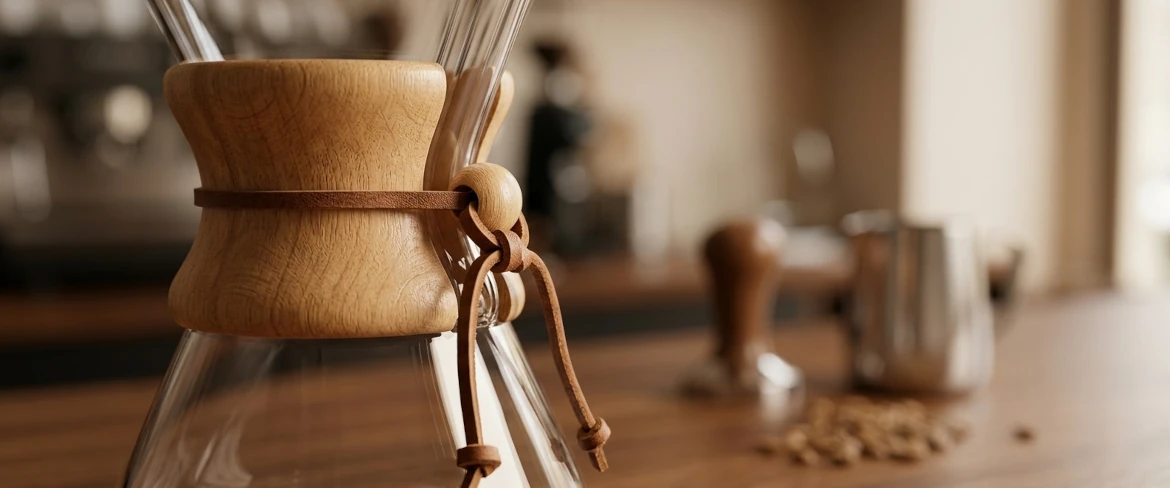
Gather your gear and ingredients
Before you heat the water, lay out your equipment. The Chemex is a pour-over brewer that relies on precision, so having the right tools makes the difference between a muddy cup and a clean, bright brew.
Essential equipment
You need a scale to measure coffee and water by weight, not volume. A gooseneck kettle is non-negotiable for controlling the pour rate. Use a grinder capable of a medium-coarse setting, similar to sea salt. Finally, ensure you have the correct Chemex filters, which are thicker than standard paper filters and contribute to the brew’s clarity.
Choose your beans
Freshness matters more than the vessel. Buy whole beans roasted within the last two to four weeks. Look for a single-origin bean with notes that complement the Chemex’s filtering power, such as floral, citrus, or tea-like profiles. Avoid dark roasts that can taste bitter or ashy when brewed this way.
-
Chemex glass server
-
Gooseneck kettle
-
Digital scale
-
Burr grinder
-
Chemex filters
-
Fresh whole bean coffee
Measure coffee and water ratios
The Chemex filter is significantly thicker than standard paper filters, which means it absorbs more oils and requires a slightly different balance to extract properly. If you use the same ratio as a standard drip machine, the result will likely be thin and under-extracted. To get the clean, bright cup the Chemex is famous for, you need to dial in your coffee-to-water ratio carefully.
Aim for a ratio between 1:15 and 1:17. The 1:15 ratio produces a bolder, more intense brew that still retains clarity, while 1:17 yields a lighter, tea-like body that highlights delicate floral or fruity notes. For most home brewers, starting at 1:16 is the safest middle ground.
Here is how that translates to practical measurements for a standard 6-cup Chemex (which holds roughly 30 oz or 900 ml of water):
| Ratio | Coffee (g) | Water (g) | Resulting Profile |
|---|---|---|---|
| 1:15 | 60 | 900 | Bold, full-bodied |
| 1:16 | 56 | 900 | Balanced, clean |
| 1:17 | 53 | 900 | Light, delicate |
Use a digital scale for precision. Volume measurements like tablespoons are inconsistent because coffee density varies by roast and grind size. Weighing both your beans and your water ensures that every cup tastes exactly like the last. Start with the 1:16 ratio, taste your brew, and adjust up or down based on whether you want more strength or more clarity.
Brew your chemex coffee
The chemex is a pour-over brewer that relies on a thick paper filter to remove oils and sediment. This creates a clean, bright cup, but it also means the process requires patience. Rushing the water flow is the most common reason chemex coffee tastes weak or sour. You need to control the pour to ensure the grounds extract evenly.
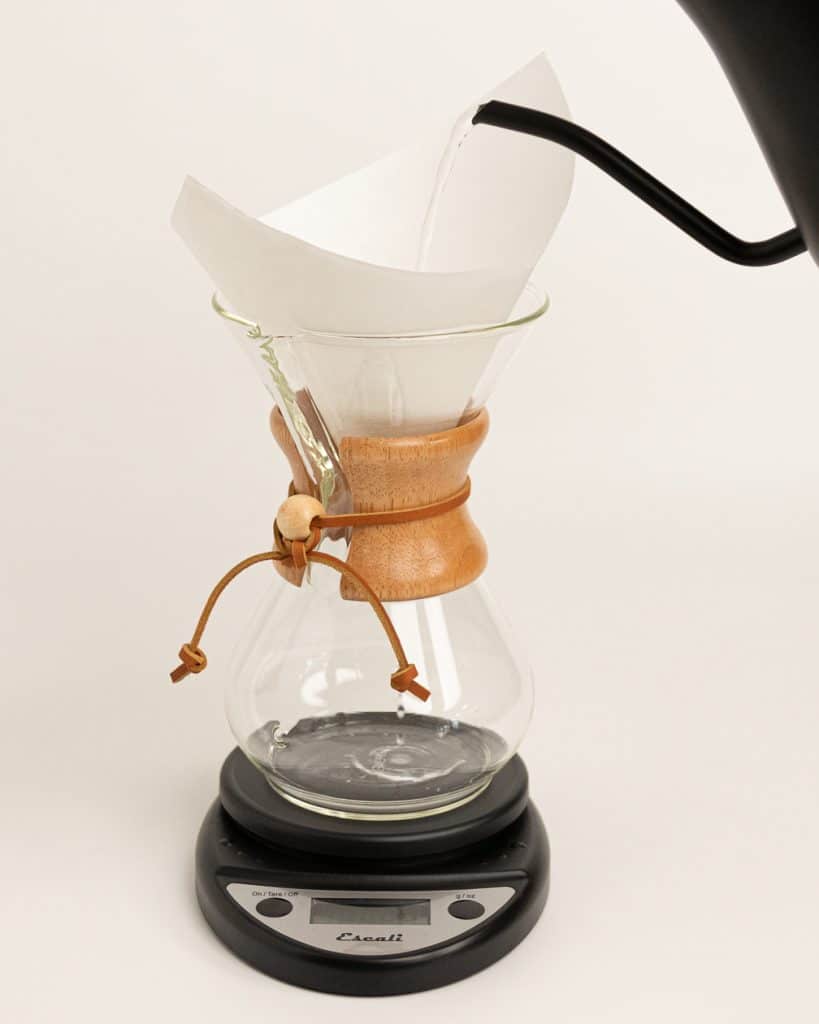
Start by folding the filter. The chemex filter has three layers on one side and one on the other. Place it in the brewer with the three-layer side facing the spout. This helps the filter seal against the glass. Pour hot water through the filter to rinse it. This removes the papery taste and warms the carafe. Discard the rinse water from the bottom.
Add your ground coffee. The grind should be coarse, like sea salt. If the grounds are too fine, the water will clog the filter and over-extract the coffee. Shake the bed gently to level the grounds. This creates a flat surface for even water distribution.
Begin the bloom. Pour just enough hot water to saturate the grounds. You should see bubbles rising as carbon dioxide escapes. This phase lasts about 30 seconds. It might look like a small volcano, but it is a necessary part of the extraction process.
Pour in stages. After the bloom, pour water in slow, concentric circles. Start from the center and move outward, then back in. Avoid pouring directly on the filter walls. Keep the water level consistent. The total brew time should be around 3.5 to 4 minutes. If the water drains too fast, your grind is too coarse. If it takes too long, grind finer.
Once the water has drained completely, remove the filter. Give the carafe a gentle swirl to mix the coffee. Pour immediately to enjoy the full flavor.
Fix common brewing errors
If your chemex coffee tastes bitter, you’re over-extracting. If it tastes sour or thin, you’re under-extracting. These flavors usually point to two variables: grind size and pour speed. Adjusting these is the fastest way to correct your brew.
When coffee tastes bitter
Bitterness means water spent too much time in contact with the grounds or the particles were too small. Check your grind first. For a chemex, you need a coarse grind, similar to raw sugar. If it looks like table salt, it’s too fine. Switch to a coarser setting and try again.
Next, look at your pour rate. Pouring too slowly gives the water more time to pull out harsh compounds. Aim for a steady, medium-paced pour. If you’re using a gooseneck kettle, keep the stream consistent. Don’t let the water sit in the bed for too long between pours.
When coffee tastes sour
Sourness usually means the water didn’t extract enough flavor. This happens when the grind is too coarse or the water moves through the filter too quickly. Start by grinding finer. The particles should be small enough to create resistance but not so fine that the brew stalls.
If the grind size is correct, check your water temperature. Water that is too cool won’t extract sugars effectively. Aim for 200°F (93°C). If you don’t have a thermometer, boil the water and let it sit for 30 seconds before pouring. This simple step can often fix a sour cup.
Frequently asked: what to check next
Put The Chemex Revolution into practice
No comments yet. Be the first to share your thoughts!