

Design and daily use
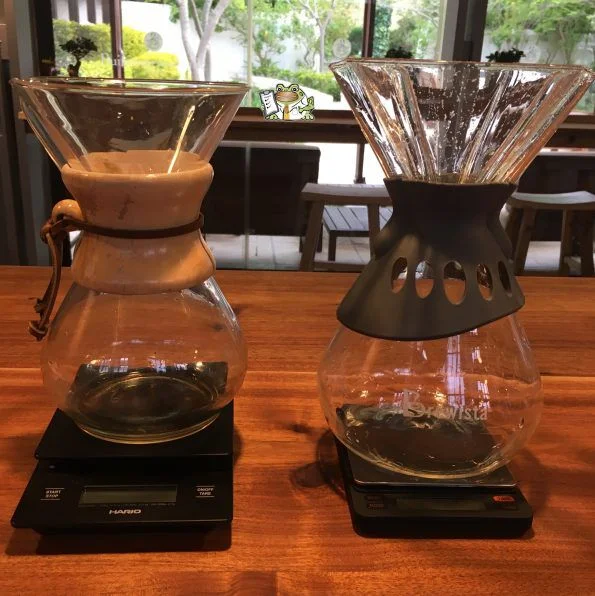
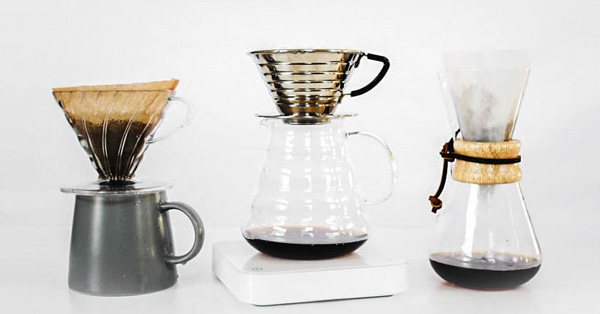
The Chemex is instantly recognizable – a laboratory-esque glass carafe cradled in a sleek wooden collar. It’s a statement piece, something you’d happily leave on the counter as a design object. It feels deliberate, considered. Smart Glass coffee makers, like the Hario V60 Alternative Brewing Mug, lean towards practicality. They're often simpler in form, sometimes even incorporating a built-in scale for precision.
The visual difference isn’t just about looks; it impacts the brewing experience. The Chemex feels like a ritual, a slower, more mindful process. It encourages you to take your time. The Smart Glass, while capable of beautiful coffee, feels more about efficiency and control. It’s a tool for achieving a specific result.
I think a lot of the Chemex’s appeal is its history and design legacy. It’s a classic for a reason. The Smart Glass, while newer, appeals to a different sensibility – one that prioritizes data and repeatability. Both have their place, and ultimately, the “better” aesthetic is entirely subjective.
Filters and flow rate
This is where the core differences start to emerge. Chemex uses uniquely thick, bonded filters – significantly thicker than standard paper filters. These filters remove a substantial amount of oils and sediment, resulting in a remarkably clean, clear cup of coffee. This can be a positive or negative, depending on your preference; some people enjoy the body and complexity that oils contribute.
Smart Glass brewers typically use standard paper filters, or increasingly, reusable metal filters. Metal filters allow more oils and sediment to pass through, creating a fuller-bodied coffee. The flow rate also differs significantly. The Chemex’s thicker filters and design contribute to a slower drip, while Smart Glass brewers often have a wider cone shape, leading to a faster flow.
The slower flow rate of the Chemex demands a more careful approach to pouring. Downshiftology’s guide from 2017 highlighted this, emphasizing how the filter impacts extraction. A faster flow rate with Smart Glass can be more forgiving, but also requires a more precise grind to prevent under-extraction. The filter choice is a fundamental decision that shapes the final brew.
- Chemex filters are thick and bonded, which slows the flow and creates a very clean cup.
- Smart Glass Filters: Standard paper or metal, faster flow rate, fuller-bodied cup.
Chemex vs. Smart Glass Coffee Makers: A Comparative Overview
| Filter Type | Oil Retention | Sediment | Flavor Profile | Relative Cost |
|---|---|---|---|---|
| Chemex (Specialty Paper) | High | Low | Clean | $$ |
| Smart Glass (Paper Filter) | Medium | Low | Balanced | $ |
| Smart Glass (Metal Filter) | Low | Medium | Full-Bodied | $ |
| Chemex | Retains more coffee oils | Minimal sediment passes through | Highlights clarity and nuance | $$$ |
| Smart Glass (Paper) | Some oils pass through | Very little sediment | Offers a good balance of flavor | $ |
| Smart Glass (Metal) | Allows most oils to pass | More sediment compared to paper | Produces a richer, heavier brew | $ |
Illustrative comparison based on the article research brief. Verify current pricing, limits, and product details in the official docs before relying on it.
Finding the right grind and ratio
Grind size determines whether your coffee tastes like battery acid or a balanced brew. The Chemex needs a coarse grind—think sea salt—because those thick filters hold onto water for a long time. If you go too fine, the water stalls and the coffee turns bitter. Smart glass brewers are more forgiving; they handle a medium-fine grind well because the water moves through the cone faster.
Coffee-to-water ratios are another crucial element. I’ve found that a 1:16 ratio (one part coffee to sixteen parts water) works exceptionally well with Chemex, providing a balanced and flavorful brew. For Smart Glass, I typically start with a 1:15 ratio. This is a good starting point, but experimentation is key.
These ratios are guidelines, not rules. Your preferred coffee bean, roast level, and personal taste will all influence the ideal ratio. Don’t be afraid to adjust and refine your technique. A simple coffee scale is invaluable for achieving consistency. I’ve found that making small adjustments to the ratio can dramatically impact the final flavor.
Coffee & Water Ratio Calculation
| Coffee Amount (grams) | Water Amount - 1:15 Ratio (grams) | Water Amount - 1:16 Ratio (grams) |
|---|---|---|
| 15 grams | 225 grams | 240 grams |
| 20 grams | 300 grams | 320 grams |
| 25 grams | 375 grams | 400 grams |
| 30 grams | 450 grams | 480 grams |
| 35 grams | 525 grams | 560 grams |
| 40 grams | 600 grams | 640 grams |
| 50 grams | 750 grams | 800 grams |
Illustrative comparison based on the article research brief. Verify current pricing, limits, and product details in the official docs before relying on it.
Pouring technique
Pour-over coffee is an art form, and both Chemex and Smart Glass demand a deliberate and consistent technique. With Chemex, a slow, steady pour is essential to ensure even saturation of the coffee grounds. The popular spiral pouring method – starting in the center and working your way outwards – helps achieve this. A consistent pour rate is key to even extraction.
Smart Glass is a bit more forgiving, but consistency still matters. The bloom phase – where you initially saturate the grounds with a small amount of water – is particularly important. Allowing the coffee to bloom for 30-45 seconds releases trapped gases and enhances flavor. I’ve seen so many people rush this step and end up with a flat, lifeless brew.
Avoiding channeling – where water flows through specific paths in the coffee bed – is crucial for both methods. Proper grind size, even saturation, and a consistent pour rate all contribute to preventing channeling. If you notice water flowing too quickly through certain areas, adjust your technique accordingly. It’s a learning process, but the rewards are well worth the effort.
- Use a slow, steady spiral when pouring into a Chemex to keep the bed level.
- Smart Glass Pouring: Consistent bloom, even saturation.
- Common Goal: Avoid channeling for even extraction.
Cleaning and maintenance
Cleaning a Chemex is a trade-off. You toss the paper filter and you're mostly done, but the narrow neck makes scrubbing the bottom of the glass a chore without a long brush. If you don't rinse it immediately, coffee oils bake onto the glass and ruin the next batch. Smart glass brewers are usually wider and easier to wipe down, though they don't have that iconic silhouette.
Smart Glass brewers are similar in terms of needing a clean carafe. If you use a metal filter, it requires more thorough cleaning to remove coffee residue. A small brush can be helpful for this. Both brewers benefit from occasional descaling to remove mineral deposits.
I find the Chemex a little easier to clean overall, mostly because of the disposable filters. But the difference isn’t massive. Consistent cleaning, regardless of the brewer, is the most important thing. A clean brewer is a happy brewer – and a better-tasting cup of coffee.
How the coffee actually tastes
Ultimately, the most important factor is the taste. Chemex consistently produces a remarkably clean, bright cup of coffee. The thick filters remove oils and sediment, resulting in a nuanced flavor profile that highlights the coffee’s origin characteristics. It’s particularly well-suited for lighter roasts, where clarity is desired.
Smart Glass offers more versatility. By experimenting with different filters – paper or metal – and grind sizes, you can achieve a wider range of flavors. Metal filters will produce a fuller-bodied cup, while paper filters will yield a cleaner brew. It's a good choice for those who like to experiment.
I prefer brewing Ethiopian Yirgacheffe in a Chemex. The heavy paper strips away the silt, leaving the floral and tea-like notes clear. For a heavy Sumatran Mandheling, I use the smart glass with a metal filter. It lets the oils through, which is exactly what you want when you're looking for that earthy, thick mouthfeel.
Featured Products

Iconic hourglass shape made of non-porous Borosilicate glass · Requires proprietary Chemex bonded filters for optimal flavor extraction · Simple, elegant design that doubles as a serving carafe
This 8-cup Chemex is a staple for pour-over enthusiasts seeking a clean, bright cup of coffee.

Iconic hourglass shape made of non-porous Borosilicate glass · Requires proprietary Chemex bonded filters for optimal flavor extraction · Simple, elegant design that doubles as a serving carafe
The 6-cup Chemex offers the same pure brewing experience in a more compact size, ideal for smaller households.

SCA Certified brewer ensures optimal brewing temperature and time · Pre-infusion mode blooms the coffee grounds for enhanced flavor · Stainless steel double-wall thermal carafe keeps coffee hot without a warming plate
The Bonavita 8-cup is recommended for its ability to replicate pour-over quality with the convenience of an automatic drip machine.

Variable brew basket adjustability for different coffee styles · Precise temperature control and flow rate customization · Includes a thermal carafe and a variety of filter baskets
Breville's Precision Brewer offers unparalleled control over brewing parameters, appealing to the technically minded coffee aficionado.
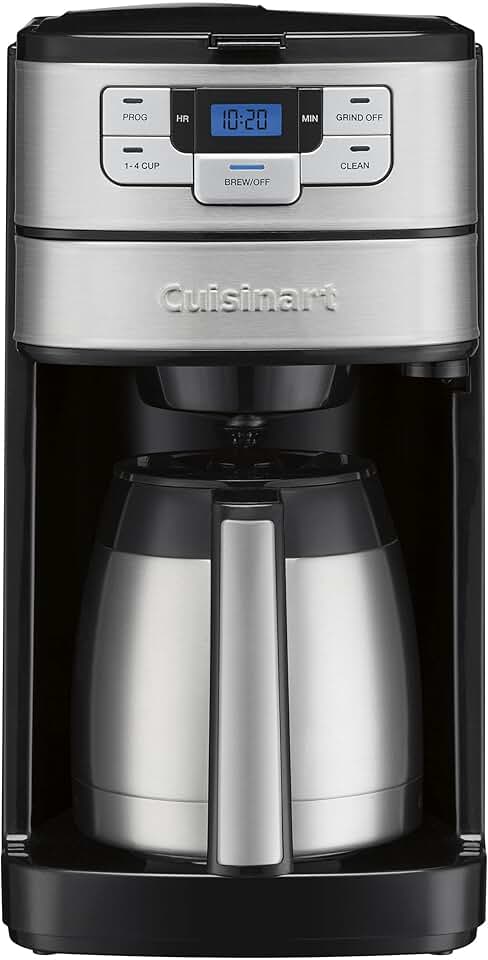
Integrated blade grinder for freshly ground beans · Programmable settings for convenience · Brew Pause feature allows for a mid-brew pour
This Cuisinart Grind & Brew provides an all-in-one solution for those who value the convenience of grinding and brewing in a single unit.
As an Amazon Associate I earn from qualifying purchases. Prices may vary.
No comments yet. Be the first to share your thoughts!