

Brewing Beyond Buttons: AI's Rise
The coffee world is buzzing, and it isn’t just about the caffeine. At CES 2025, artificial intelligence moved beyond smart speakers and into our kitchens, specifically, our coffee makers (Yahoo.com). This isn't a fleeting trend; it’s a fundamental shift in how we approach brewing. We’re heading into 2026 with a new generation of machines promising a level of personalization and control previously unimaginable.
For years, programmable coffee makers have offered convenience, but often at the expense of quality. Many struggle with consistent temperature control or offer limited customization options (YouTube.com). This is where AI steps in. It’s not about replacing the ritual of coffee making for everyone, but about elevating it—removing the guesswork and delivering a consistently perfect cup.
The timing is right. Advances in sensor technology are now affordable enough to integrate into consumer appliances. Simultaneously, processing power has increased dramatically, allowing for more complex algorithms to run efficiently. Most importantly, consumers are increasingly open to—and even expect—personalized experiences. They want a coffee maker that understands their preferences, not the other way around.
This isn’t just about convenience, though that’s a definite perk. It's about the pursuit of the ideal brew. For coffee enthusiasts, it’s about unlocking the full potential of their beans and consistently achieving that elusive, perfect cup. And frankly, for the rest of us, it’s about a reliably good cup of coffee without the effort.
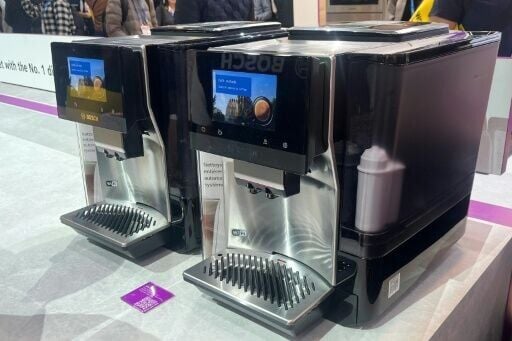
The Core Tech: What's Inside?
Forget images of robots pouring coffee; the AI in these machines is far more subtle. We’re talking about machine learning, specifically, algorithms designed to analyze data and make adjustments to the brewing process. It’s not artificial general intelligence, but a focused application of AI to a very specific task: making better coffee.
At the heart of these machines are sensors. They’re monitoring everything from water temperature—crucially important for extraction—to the weight of the beans, the grind size, and even the bloom time (the initial wetting of the grounds). This data is then fed into an algorithm that learns to correlate these parameters with the user’s preferences.
How does the learning happen? It’s largely through predictive modeling. The machine starts with a baseline recipe and then adjusts based on user feedback. If a user consistently adds more water to their cup, the machine learns to brew a stronger batch next time. Over time, it builds a profile of the user’s ideal coffee. The more data it collects, the more accurate its predictions become.
Many of these machines are also cloud-connected. This allows for data sharing—anonymized, of course—which can contribute to ongoing algorithm improvements. It also enables remote diagnostics and software updates. The potential for over-the-air updates is significant, meaning your coffee maker could actually get better over time. There are obvious privacy concerns here, and manufacturers are rightly emphasizing data security.
Personalization: Your Coffee, Perfected
The real power of AI coffee makers lies in their ability to personalize the brewing experience. This goes far beyond simply setting a brew strength. Traditional programmable coffee makers let you choose “bold” or “mild,” but they don’t learn what “bold” means to you.
Consider a scenario: a user consistently adjusts the strength dial up a notch each morning. An AI-powered machine would recognize this pattern and proactively brew a slightly stronger batch the next day. Or, imagine a user providing feedback on flavor notes—'too bitter,' 'not enough chocolate.' The machine could then adjust parameters like water temperature or brew time to fine-tune the flavor profile.
The potential for profile sharing within a household is also appealing. Each family member could have their own personalized settings, ensuring everyone gets their coffee exactly how they like it. No more compromises or wasted coffee. I find this especially useful for households with diverse coffee preferences.
It’s the idea of a coffee maker that adapts to your changing tastes that I find particularly compelling. Our preferences aren’t static; they evolve over time. An AI-powered machine can keep pace with those changes, ensuring your coffee is always perfectly tailored to your current mood and palate.
Automated Pour Over: A New Level of Control
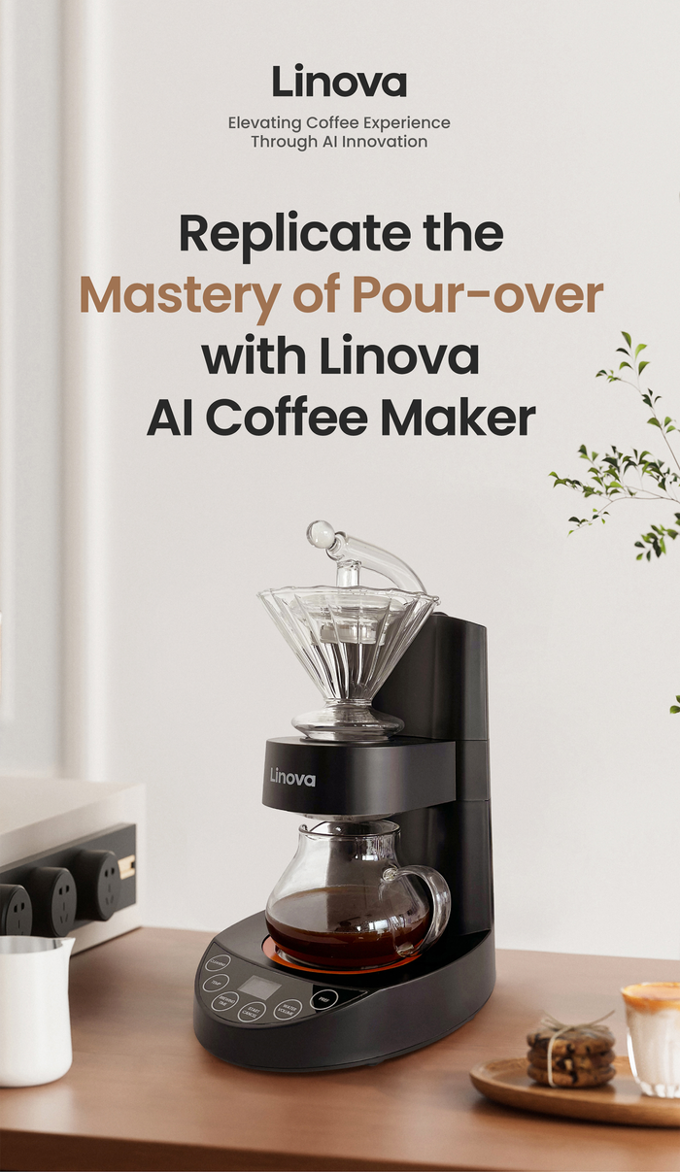
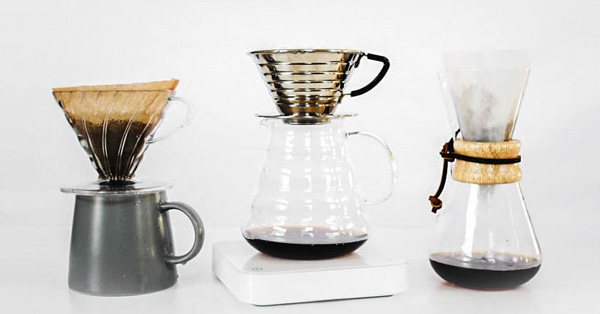
For coffee enthusiasts, the pour over method is a ritual—a delicate dance of water temperature, flow rate, and bloom time. It’s a technique that demands precision and consistency. But it also requires skill and practice. AI coffee makers are now automating this process, bringing a new level of control and repeatability to the pour over experience.
These machines use sensors and algorithms to precisely control every aspect of the pour over process. Water temperature is maintained within a narrow range, and the flow rate is adjusted to ensure even saturation of the coffee grounds. Bloom time is carefully monitored to allow the coffee to degas properly. The goal is to replicate the precision of a skilled barista, but without the human error.
Some models even allow you to select specific brewing techniques. For example, you might be able to choose to replicate James Hoffmann’s renowned 4:6 method (a specific coffee-to-water ratio and brew time). This is a huge benefit for those who want to experiment with different brewing methods but lack the time or expertise to do so manually. For a deep dive into pour over techniques, explore Real Coffee Club’s comprehensive guide.
The beauty of this automation is that it removes the variables, allowing you to focus on enjoying the coffee. You can consistently achieve a high-quality pour over without the need for constant attention or specialized equipment. It’s a game-changer for both beginners and experienced coffee drinkers.
Beyond the Brew: Smart Integrations
The benefits of AI coffee makers extend beyond the brewing process itself. These machines are increasingly integrating with the connected home ecosystem, offering a range of smart features and conveniences.
Voice control is a key component. Most models will be compatible with popular voice assistants like Alexa and Google Assistant, allowing you to start brewing a pot with a simple voice command. Integration with smart scales allows for precise bean measurement, further enhancing the accuracy of the brewing process.
Perhaps even more convenient is the automatic ordering of coffee beans. When the machine detects that your supply is running low, it can automatically reorder beans from your preferred supplier. This eliminates the hassle of manually tracking your inventory and ensures you never run out of coffee. There’s also potential for integration with sleep trackers, allowing the machine to brew coffee automatically when you wake up.
However, it’s important to be mindful of data privacy concerns. These machines collect a significant amount of data about your coffee drinking habits. It’s crucial to ensure that this data is securely stored and protected. Look for models that offer robust security features and transparent data privacy policies.
AI-Powered Coffee Maker Integration Options: A Qualitative Comparison (Projected to 2026)
| Integration Feature | Ease of Use | Convenience | Privacy Concerns | Current Availability |
|---|---|---|---|---|
| Voice Control | Medium | High | Medium | Increasing |
| Smart Scale Integration | Medium | Medium | Low | Limited |
| Automated Bean Reordering | High | High | Medium | Emerging |
| Sleep Tracker Synchronization | Low | Medium | High | Experimental |
| Brewing Profile Learning (AI) | Medium | High | Low | Developing |
| Water Quality Sensor Integration | Medium | Medium | Low | Limited |
| Automatic Cleaning Cycle Scheduling | High | Medium | Low | Increasing |
Illustrative comparison based on the article research brief. Verify current pricing, limits, and product details in the official docs before relying on it.
The 2026 Landscape: Models to Watch
Predicting the exact models that will dominate the market in 2026 is challenging, but several manufacturers are already making significant strides in the AI-powered coffee maker space. At CES 2025, several prototypes showcased exciting features, hinting at what’s to come.
The 'BeanWise' model, for instance, focuses heavily on personalization, using a sophisticated algorithm to learn your taste preferences and adjust brewing parameters accordingly. It's positioned as a premium option, likely in the $400-$600 range. 'BrewBot,' on the other hand, is targeting the entry-level market with a more affordable model—around $250—that prioritizes ease of use and automated pour over functionality.
Another contender, 'AromaTech,' is emphasizing smart integrations, offering seamless compatibility with a wide range of smart home devices. They are touting a subscription service that automatically delivers freshly roasted beans based on your consumption patterns. This model is expected to be priced in the $350-$500 range.
I'm hesitant to declare any single model the “best,” as individual needs and preferences vary greatly. However, these three represent promising examples of the innovation happening in the AI coffee maker space. Look for models that prioritize features that are most important to you, whether it’s personalization, automation, or smart integrations.
Troubleshooting & Maintenance: Keeping it Smart
AI coffee makers, while advanced, aren’t immune to technical issues. It’s important to consider the potential for malfunctions and the level of support available. Unlike traditional coffee makers, troubleshooting may require more than just descaling.
Software updates will be crucial for maintaining optimal performance and security. Manufacturers should provide a simple and reliable way to update the machine’s firmware. Remote diagnostics are also a possibility, allowing technicians to remotely identify and resolve issues. This is a relatively new concept for coffee makers, so the support infrastructure is still developing.
Regular maintenance will still be necessary. Descaling is essential for preventing mineral buildup, and cleaning the various sensors and components will be important for ensuring accurate readings. The complexity of these machines may require more frequent maintenance than traditional models.
It's realistic to expect that these machines will require a higher level of technical support than their simpler counterparts. Choosing a manufacturer with a strong reputation for customer service is therefore particularly important.
The Future of Brewing: Beyond 2026
Looking beyond 2026, the potential for AI in coffee making is truly exciting. We could see machines that automatically adjust to external factors like humidity and altitude, optimizing the brewing process for the specific environment.
Imagine a coffee maker that can analyze the beans themselves—identifying their origin, roast level, and even their chemical composition—to create a perfectly tailored brew. Or, perhaps machines that can learn from a global database of coffee recipes and create entirely new flavor combinations.
The possibilities are endless. AI could even personalize the coffee-making experience on a molecular level, adjusting the extraction process to target specific flavor compounds. It’s a future where every cup of coffee is a masterpiece, perfectly crafted to your individual preferences.
While these ideas may seem far-fetched today, the rapid pace of innovation in the AI field suggests that they could become a reality sooner than we think. The future of coffee brewing is intelligent, personalized, and incredibly exciting.
No comments yet. Be the first to share your thoughts!