

The Rise of the Intelligent Coffee Machine: Beyond Timers and Auto-Shutoff
For years, the "smart’ coffee maker has meant little more than a programmable timer or an app to remotely start your brew. That"s changing. We're on the cusp of a real shift with the emergence of AI-powered machines, and it goes far beyond convenience. These aren’t just about brewing coffee when you wake up; they’re about fundamentally improving the quality and consistency of your pour over experience.
Currently, automated pour over options largely fall into two categories: machines that mimic a human pour, and those that focus on precise temperature control. While helpful, these still lack the adaptability needed to truly optimize each brew. The machines available today, like some of the higher-end Technivorm Moccamasters, provide excellent temperature stability, but they don’t learn from your preferences or adjust to the specific characteristics of your beans. The next generation will.
By 2026, we can expect to see machines that utilize artificial intelligence to analyze and react to a multitude of variables, creating a personalized pour over experience previously only achievable with a skilled barista. This technology augments the ritual of pour over, ensuring a consistently excellent cup every time. The goal is to remove the guesswork and allow you to focus on enjoying the coffee.
This is not just a marketing buzzword. The potential to refine brewing parameters in real-time, based on data and machine learning, is a genuine step forward. Coffee makers will understand your taste and adapt to deliver it, even as your beans and preferences evolve.
What Does 'AI' Even Mean in a Coffee Maker?
your coffee maker isn't going to develop sentience anytime soon. The 'AI' in these machines refers to technologies designed to analyze data and make informed decisions to optimize the brewing process. Machine learning is a component. This allows the coffee maker to learn from your feedback and adjust its parameters accordingly.
Sensor integration is another element. These machines will utilize sensors to monitor variables like water temperature, flow rate, and even the bloom of the coffee grounds. This real-time data provides a constant stream of information that the AI can use to make adjustments. Some advanced models may incorporate computer vision to analyze the bloom, the initial saturation of the coffee grounds, providing insights into the freshness and quality of the beans.
The data collection aspect must be acknowledged. These machines will be gathering information about your brewing habits and preferences. How that data is stored, used, and protected is paramount. Transparency from manufacturers will be essential to build trust. Manufacturers must be transparent about what data is collected and how it is utilized to improve the brewing experience.
The use of AI in coffee makers is about creating a feedback loop. The machine brews, you provide feedback, the machine learns, and the next brew is even better. This iterative process is what sets these machines apart from their predecessors. This is a significant shift from pre-programmed settings to personalized brewing.
- Machine Learning: Adapts to user preferences.
- Sensor Integration: Monitors brewing variables in real-time.
- Computer Vision: Analyzes the bloom for insights into bean quality.
AI Features in 2026 Coffee Makers
- Personalized Preference Profiling - Machine learning algorithms analyze your past brewing choices and ratings to predict your ideal coffee profile, adjusting parameters like strength and flavor. This builds on existing smart coffee maker features like user profiles.
- Automated Grind Size Optimization - Predictive algorithms, informed by bean type and roast level, suggest or automatically adjust grinder settings for optimal extraction. Some grinders, like those from Baratza, already offer stepped adjustments; AI will refine this further.
- Real-time Bloom Assessment - Computer vision systems analyze the coffee bloom – the initial release of gases when hot water hits the grounds – to assess coffee freshness and grind consistency. This data informs adjustments to brewing parameters.
- Precise Temperature & Flow Control - Sensor fusion combines data from temperature sensors and flow rate meters to maintain optimal brewing conditions. This builds on features found in high-end pour over devices like the Fellow Stagg EKG, which already focuses on temperature control.
- Dynamic Water Distribution - AI-powered systems can adjust the water flow pattern during the pour over process, ensuring even saturation of the coffee grounds. This aims to minimize channeling and maximize extraction.
- Bean Recognition & Brewing Recommendations - Utilizing image recognition, the coffee maker identifies the type of coffee bean and automatically suggests brewing parameters based on a database of bean characteristics. This could integrate with existing bean subscription services.
- Automated TDS/Extraction Monitoring - Integrated sensors measure Total Dissolved Solids (TDS) and extraction yield in real-time, providing data-driven insights into brew quality. This builds on existing professional-grade monitoring tools.
Gevi 4-in-1 Smart Pour Over Coffee Machine
— Goodgurureviews.com (@goodgurureviews) May 19, 2024
Find Your Next Special Item With Us!
Click Link Below or Link In Bio To Learn More:https://t.co/JBi5oefvqQ pic.twitter.com/hzbdqZQSE0
The Core Capabilities: How AI is Changing Pour Over Variables
The beauty of pour over lies in the control you have over the brewing process. AI-powered machines aim to replicate – and even improve upon – that control. Water temperature, pour rate, bloom time, and grind size are all areas where AI can make an impact.
Water temperature is the most critical variable. AI adjusts the temperature based on bean origin and roast level. For example, a lighter roast Ethiopian Yirgacheffe benefits from slightly higher water temperature to fully extract its delicate flavors, while a darker roast Sumatran Mandheling requires a lower temperature to avoid bitterness. The machine learns your preference for certain bean types and automatically adjusts accordingly.
Pour rate is another factor. An AI-powered machine alters the pour rate based on the grind size and the resistance of the coffee bed. A coarser grind requires a slightly slower pour rate to ensure even saturation, while a finer grind necessitates a faster pour rate to prevent over-extraction. Achieving this level of precision consistently by hand is difficult.
Bloom time is underestimated. AI monitors the bloom and adjusts the pour rate to ensure optimal degassing. A healthy bloom indicates fresh coffee, while a lackluster bloom suggests stale beans. The machine alerts you if it detects a consistently poor bloom, suggesting you purchase fresher beans. Fully automated grind size adjustment by 2026 is ambitious, but the integration of smart grinders with AI-powered brewers is a possibility.
Sensors are vital in achieving this precision. Flow sensors, temperature sensors, and pressure sensors provide the AI with the data it needs to make informed decisions. The machine is not just following a pre-programmed recipe; it is constantly analyzing and adjusting based on real-time feedback. This differentiates it from a standard automated brewer.
Current Players and Prototypes: A Look at the Emerging Market
Fully AI-powered pour over machines are still largely on the horizon, but several existing 'smart' coffee makers are laying the groundwork. Brands like Breville and Smarter are already offering machines with app control, programmable settings, and even voice assistant integration. These features are not AI in the true sense, but they represent a step towards greater automation and personalization.
NBC Select's 'Best Coffee Makers of 2026' report states that models like the Breville Precision Brewer Thermal offer precise temperature control and pre-infusion settings, features that AI could build upon. The report highlights the increasing demand for customizable brewing experiences, a trend driving innovation in this space. The YouTube video, "Best Coffee Makers 2026," showcases several models with advanced features, but none quite reach the level of true AI-powered automation.
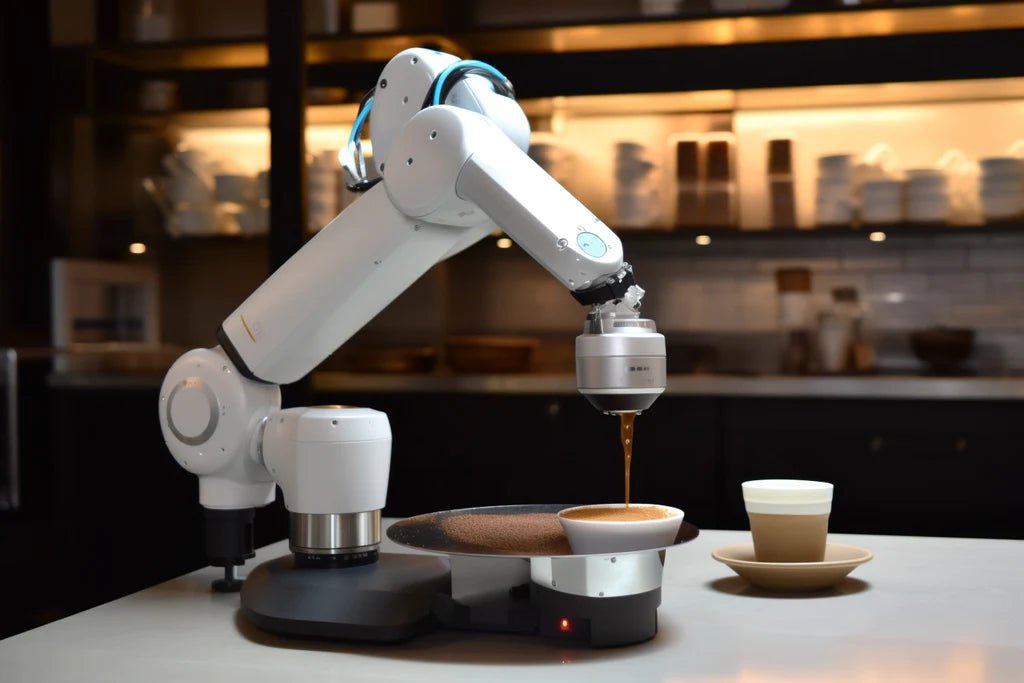
There’s also been some interesting activity in the commercial space. Innovative vending machine concepts, as highlighted by ydr.com, are exploring the use of AI-powered robotic coffee kiosks. These kiosks can grind beans, brew coffee, and even customize drinks based on customer preferences. While not directly applicable to home use, these prototypes demonstrate the potential of AI in coffee brewing.
Currently, no major manufacturer has released a product explicitly marketed as an "AI-powered pour over machine." However, several startups are reportedly working on such devices, focusing on machine learning algorithms to optimize brewing parameters. We can expect to see more concrete announcements in the coming years as the technology matures and becomes more affordable.
- Breville Precision Brewer Thermal: Precise temperature control.
- Smarter Coffee: App control and voice assistant integration.
- AI-powered robotic coffee kiosks: Commercial prototypes demonstrating AI capabilities.
Top Smart Coffee Makers for the Future of Pour Over
Integrated grinder with adjustable grind size · Adjustable brew strength and temperature · Single-cup or full carafe brewing options
This machine offers precise control over grind and brew settings, mimicking the customization of manual pour-over with automated convenience.
Smart pour-over technology with precise water dispersion · Programmable brew start time · Keep warm function
It brings the meticulousness of pour-over brewing into a smart, programmable appliance, perfect for those who appreciate the technique but desire automation.
Wi-Fi enabled for app control · Built-in grinder with 6 settings · Adjustable brew temperature and brew strength
This offers a comprehensive smart experience, allowing remote control and customization of grind and brew parameters for a superior cup.
Wi-Fi connectivity for app control · Voice control compatibility (Alexa, Google Assistant) · Sleek, modern design
For a streamlined smart experience, this coffee maker integrates seamlessly with smart home ecosystems, offering convenience and modern aesthetics.
Wi-Fi enabled for remote operation · Programmable brew settings · Auto shut-off and brew pause
This is a great entry point into smart coffee brewing, providing essential automation and remote control at an accessible price point.
As an Amazon Associate I earn from qualifying purchases. Prices may vary.
The Data-Driven Brew: Personalization and Preference Learning
The true potential of AI in coffee brewing lies in its ability to learn your individual preferences. Imagine a machine that not only adjusts to the bean type but also to your specific palate. This requires a system for capturing and analyzing your feedback. This could take the form of simple ratings – “too weak,” “too strong,” “just right” – or more nuanced adjustments to brewing parameters.
The machine could track your adjustments over time and identify patterns. For example, if you consistently lower the water temperature when brewing a particular bean, the AI will learn to automatically adjust the temperature for that bean in the future. This iterative learning process is what allows the machine to refine its brewing parameters and consistently deliver your perfect cup.
However, capturing subjective preferences is a challenge. Taste is highly personal, and what one person considers “perfect” another might find unappealing. The user interface needs to be intuitive and allow for easy feedback. A simple, visual interface with clear options for adjustment is crucial. The machine shouldn't overwhelm you with data; it should seamlessly adapt to your preferences.
The key is to create a system that's both powerful and user-friendly. The machine should be able to learn from your feedback without requiring you to become a coffee expert. It should be able to anticipate your needs and deliver a consistently excellent brewing experience. This level of personalization is where AI will truly revolutionize the pour over process.
What's Your Ideal Pour Over?
The future of coffee is here! AI-powered coffee makers are poised to personalize your pour over experience like never before. But to unlock the full potential of this technology, it helps to understand *your* preferences. This quick quiz will help pinpoint the ideal brewing parameters to match your taste, paving the way for a truly customized cup in 2026 and beyond.
Beyond the Brew: Smart Integration and Ecosystems
AI-powered coffee makers won’t operate in isolation. Integration with other smart home devices and ecosystems will be a key feature. Voice assistants like Amazon Alexa or Google Assistant could allow you to start a brew with a simple voice command, or adjust brewing parameters on the fly. Smart scales could automatically measure the coffee grounds and water, ensuring precise ratios.
The potential for data sharing with coffee bean suppliers and roasters is also intriguing. Imagine a system where your coffee maker automatically sends data about your brewing habits and preferences to your favorite roaster. They could then use this information to recommend new beans or create custom blends tailored to your taste. This creates a closed-loop system where the coffee maker, the roaster, and the consumer all benefit.
Subscription services could leverage AI to automate the bean ordering process. The machine could monitor your consumption and automatically reorder beans when supplies are low, ensuring you never run out of your favorite brew. These services could also offer personalized recommendations based on your brewing history and preferences.
This interconnected ecosystem extends beyond the coffee maker itself. Integration with smart home hubs could allow you to create custom routines, such as automatically brewing a cup of coffee when your alarm goes off. The possibilities are endless, and the potential for convenience and personalization is immense.
- Voice assistant integration: Control brewing with voice commands.
- Smart scale integration: Precise measurement of coffee grounds and water.
- Data sharing with roasters: Personalized bean recommendations.
Content is being updated. Check back soon.
The Future of Pour Over: Challenges and Opportunities
Despite the immense potential, several challenges stand in the way of widespread adoption of AI-powered coffee makers. Cost is a significant hurdle. The advanced sensors, processors, and software required to implement these features will inevitably increase the price of the machines. Complexity is another concern. A user-friendly interface is crucial, but ensuring that the machine is easy to operate and maintain will be a challenge.
Data privacy is also a paramount concern. Consumers will need to be confident that their brewing data is being protected and used responsibly. Transparency from manufacturers will be essential to build trust. The inherent variability of coffee beans presents another challenge. Factors like bean age, storage conditions, and even humidity can all affect the brewing process, making it difficult for the AI to consistently achieve optimal results.
However, the opportunities are immense. Consistently perfect coffee, personalized brewing experiences, and a deeper understanding of the art and science of coffee are all within reach. AI has the potential to democratize the pour over experience, making it accessible to a wider audience.
The future of pour over is likely to be a hybrid approach, combining the precision of AI with the artistry of the human barista. These machines won’t replace skilled baristas; they’ll empower coffee lovers to brew exceptional coffee at home, consistently and effortlessly. It’s a future where technology enhances, rather than replaces, the ritual of enjoying a perfect cup of coffee.
AI-Powered Coffee Makers Price Prediction 2026
Bull / Base / Bear scenario analysis
| Timeframe | Bull Case | Base Case | Bear Case | Key Driver |
|---|---|---|---|---|
| 1 Month | $320-850 | $310-820 | $290-780 | Holiday season demand and early adopter interest |
| 3 Months | $350-900 | $325-840 | $280-760 | Market penetration and consumer feedback cycles |
| 6 Months | $400-1000 | $340-860 | $260-720 | Manufacturing scale and competition intensity |
| 1 Year | $450-1200 | $350-880 | $220-650 | Technology maturation and mass market adoption |
Price Prediction Summary
AI-powered coffee makers are expected to see moderate price increases in the bull scenario driven by premium positioning and advanced features, while the base case suggests steady growth with gradual price optimization. Bear case reflects potential price compression from increased competition and manufacturing efficiencies.
Key Factors Affecting AI-Powered Coffee Makers Stock Price
- AI chip costs and availability
- Consumer adoption rates for smart appliances
- Competition from traditional coffee maker manufacturers
- Manufacturing scale economies and supply chain optimization
Disclaimer: Predictions are speculative and not financial advice. Stock price predictions are based on current market analysis and may vary significantly due to market volatility, economic conditions, and other unpredictable factors. Always do your own research before making investment decisions.
No comments yet. Be the first to share your thoughts!