

Why bean quality matters
Pour-over brewing is unforgiving. Unlike a standard drip machine that masks flaws with heat and speed, the pour-over method highlights the raw character of the bean. If the coffee is stale, the flavor collapses into sourness or flat bitterness. The foundation of a good cup is not the technique, but the quality of the bean itself.
Real Coffee Club addresses this by focusing on consistency and freshness. Their subscription model ensures you receive beans roasted recently, rather than months-old inventory sitting on a shelf. This approach removes the guesswork from freshness, allowing the specific tasting notes of the roast to shine through.
When you brew with beans that have been roasted within days of shipping, the oils are intact, and the aromatic compounds are active. This results in a cup that tastes exactly as the roaster intended, with bright acidity and clear body.
Calculate your coffee ratio
The difference between a flat, watery cup and a bright, flavorful pour-over often comes down to one variable: the ratio of coffee to water. Without a consistent mathematical foundation, your brewing results will fluctuate based on guesswork. By treating your recipe like a precise formula, you ensure that every batch delivers the intensity and clarity you expect from your beans.
Most specialty coffee standards recommend a starting ratio between 1:15 and 1:17. This means for every gram of coffee, you use 15 to 17 grams of water. A 1:15 ratio yields a bolder, more concentrated brew, while 1:17 offers a lighter, more tea-like clarity. Finding your preferred strength within this range is the first step to mastering your pour-over.
To make this easy, use the calculator below. Enter your desired final volume of brewed coffee and select your strength preference. The tool will determine exactly how many grams of coffee and water you need for that specific batch.
Once you have your numbers, weigh your coffee before grinding. This precision removes the ambiguity of "scoops" or "cups," allowing you to replicate your best brew day after day. As you experiment with different beans, you can adjust these ratios slightly to highlight specific tasting notes, but always start with a measured base.
Grind size and water temperature
The physics of extraction depend on two variables: particle size and heat. Water must be hot enough to dissolve coffee solids but not so hot that it burns them. The grind determines how fast that water moves through the bed. Too fine, and the water chokes; too coarse, and the brew tastes thin.
Real Coffee Club recommends starting with 200°F (93°C) water for most pour-over methods. This temperature range pulls out the complex acids and sugars without extracting the bitter tannins that linger at higher heats. Use a thermometer to check your kettle. If you lack one, boil the water and let it sit for 30 to 45 seconds before pouring.
Chemex and Coarser Grinds
The Chemex requires a coarser grind than a standard V60 or Kalita Wave. The thick paper filter used in Chemex brewers blocks fine particles, which can cause the water to pool and stall. A grind resembling sea salt allows the water to flow through at the correct rate, ensuring a clean, bright cup.
If your brew takes less than three minutes, your grind is too coarse. If it drags on past four minutes and leaves a bitter aftertaste, you are likely grinding too fine. Adjust in small increments. A burr grinder is essential for consistency; blade grinders create uneven particles that extract at different speeds, leading to a muddy flavor profile.
Step-by-step pour-over technique
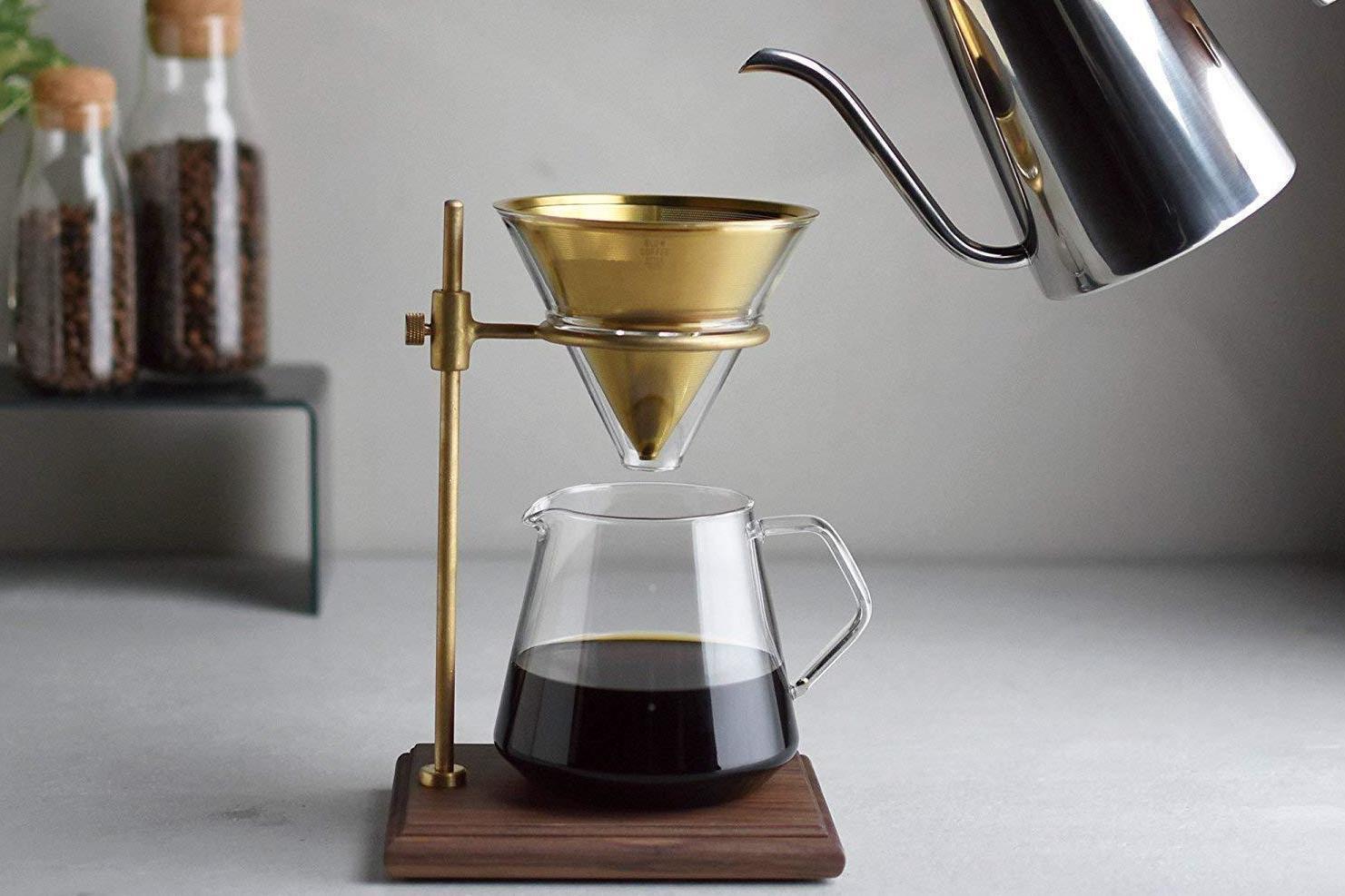
The difference between a flat, bitter cup and a bright, complex one comes down to control. Pour-over brewing is less about the equipment and more about the rhythm of your pour. By mastering the bloom and the pour pattern, you extract the desirable acids and sugars while leaving the bitter compounds behind.
1. Bloom the grounds
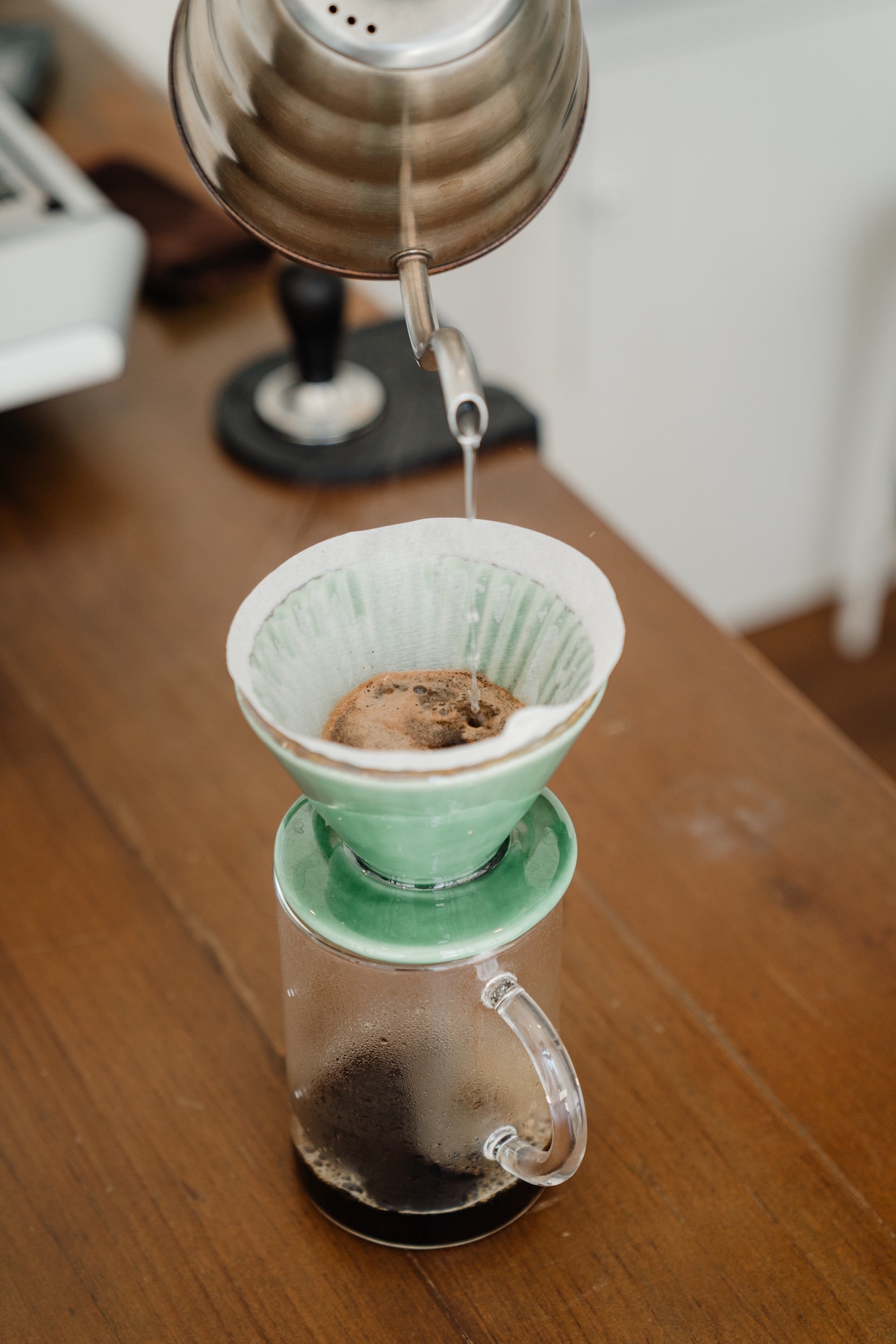
Place your filter in the dripper and rinse it with hot water to remove paper taste and warm the vessel. Discard this water. Add your ground coffee—typically a medium-fine grind, similar to sea salt—and start your timer. Pour just enough hot water (about 200°F) to saturate the grounds. You will see the coffee bubble and rise; this is the bloom. It releases trapped carbon dioxide, allowing water to contact the coffee evenly in the next stage. Let it sit for 30 to 45 seconds.

2. Pour in slow circles
Begin the main pour immediately after the bloom. Start in the center of the coffee bed and move in slow, concentric circles, working your way outward toward the filter edge, then back inward. Keep the water level consistent. This spiral pattern ensures even saturation and prevents channeling, where water finds the path of least resistance and bypasses the grounds. Pour steadily until you reach your target water weight.
3. Stir and draw down
Once you have added all the water, give the brew a gentle stir with a spoon or paddle. This knocks any dry grounds off the sides of the filter and ensures all particles are submerged. Watch the draw-down as the water filters through the grounds. The total brew time should typically fall between 2:30 and 3:30 minutes, depending on your grind size and desired strength. If it draws down too fast, your grind is too coarse; if it stalls, it is too fine.
4. Serve immediately
When the draw-down is nearly complete, remove the dripper. Swirl the carafe or server gently to mix the brew, ensuring the bottom layer (which is often stronger) blends with the top. Pour your coffee into a pre-warmed mug. Pour-over coffee is best enjoyed fresh, as the clarity of flavor diminishes quickly as it cools or sits in a thermal carafe.
Troubleshoot common brew errors
Your pour-over should taste balanced, sweet, and clean. If it tastes bitter or sour, the extraction is off. The goal is to dissolve the right amount of solids from the beans. Over-extraction pulls out harsh compounds; under-extraction leaves the bright acids untouched. You can fix both by adjusting your grind size, water temperature, or pouring technique.
Bitter or Astringent Coffee
Bitterness usually means the water spent too much time in contact with the grounds, or the grind was too fine. This pulls out undesirable tannins and ash-like flavors. To fix this, coarsen your grind slightly. You can also lower your water temperature by a few degrees or pour more quickly to reduce total brew time.
Sour or Thin Coffee
Sourness indicates under-extraction. The water didn't dissolve enough sugar or body from the beans. This often happens if the grind is too coarse or the water isn't hot enough. Adjust by using a finer grind. Ensure your water is between 195°F and 205°F. Slowing your pour to extend contact time can also help balance the acidity.
| Symptom | Likely Cause | Adjustment |
|---|---|---|
| Bitter / Astringent | Over-extraction | Coarsen grind, lower temp, or pour faster |
| Sour / Thin | Under-extraction | Fine grind, raise temp, or pour slower |
| Weak / Watery | Low coffee-to-water ratio | Increase coffee dose by 5-10g |
| Muddy / Gritty | Grind too fine or filter leak | Check burr alignment or use fresh filters |
How the Real Coffee Club subscription works
The Real Coffee Club subscription delivers fresh, award-winning coffee beans directly to your door on a monthly basis. You commit to a 12-month term, ensuring a steady supply of high-quality beans without the need to restock manually. This approach removes the guesswork from selecting beans, as you receive curated blends chosen for their flavor profiles and brewing suitability.
Delivery options and bean selection
You have flexibility in how much coffee you receive each month. The subscription offers three package sizes: four 250g bags, two 500g bags, or a single 1kg bag. Each option includes free freight Australia-wide, simplifying the logistics for you. You can choose from a range of award-winning blends, allowing you to experiment with different roast levels and origins while maintaining a consistent brewing routine.
By locking in your preference for 12 months, you secure your monthly delivery schedule. This structure ensures you never run out of fresh coffee and allows you to build a consistent relationship with your chosen roaster. For the most current blend availability and specific pricing details, refer to the official Real Coffee Club product page.
No comments yet. Be the first to share your thoughts!